


Engineers Are Reconnecting Ecosystems and Improving Safety Through Wildlife Crossings
May 27, 2026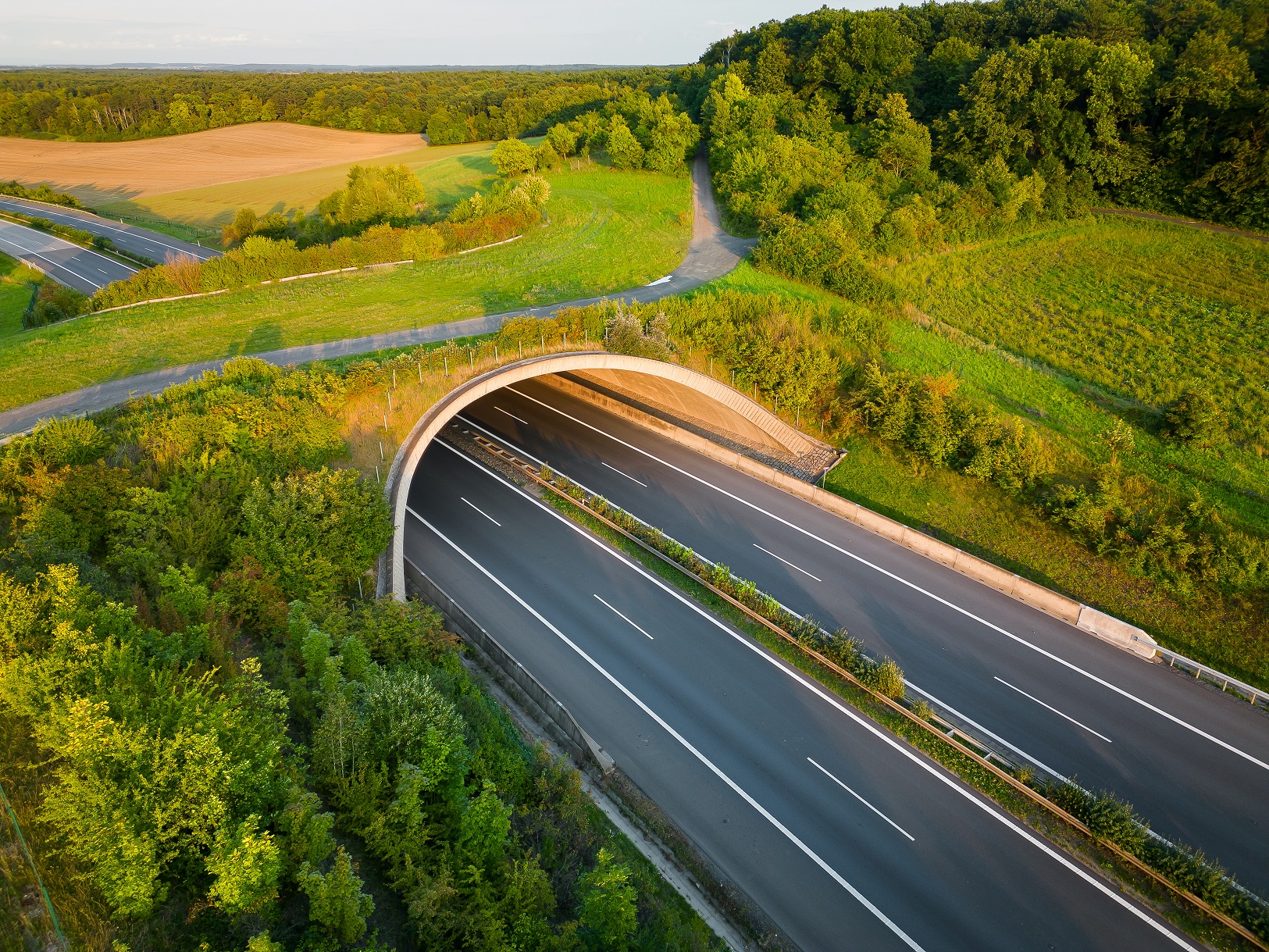
Picture this: a mountain lion hesitating at the edge of a busy, six-lane interstate. A vast expanse of asphalt and human infrastructure now cuts through the lion’s natural habitat and a once quiet migration corridor for hundreds of threatened species. The reality is that these animals either turn back, becoming isolated from critical resources and breeding grounds, or risk a crossing they may not survive. Today, however, a growing number of environmentally focused infrastructure innovations are helping change that reality. Wildlife bridges, underpasses, and habitat corridors are giving animals a safer path through landscapes increasingly dominated by human development, offering many species a greater chance of survival and long-term species recovery through responsible engineering.
The Impact of Wildlife Crossings
Wildlife crossings are emerging as one of the most compelling examples of creative infrastructure that can serve more than one purpose. Engineered to span highways without disrupting the ecosystems around them, these structures are redefining what it means to build responsibly, leading to many ecological and safety benefits for both humans and animals.
Two groundbreaking projects have become benchmarks for future similar engineering endeavors. Banff National Park's wildlife crossing in Canada is performing research that spans nearly three decades. When the Trans-Canada Highway was built to cut through the park, planners installed fencing alongside six overpasses and 41 underpasses to channel animals safely across, and what happened next has transformed the field. Wildlife-vehicle collisions dropped by more than 80% overall, with deer and elk collisions down by 96%. Decades of documented results from the Banff crossings have since influenced crossing design in Costa Rica, Argentina, and parts of Asia.
Recently in the US, the Colorado Department of Transportation's Greenland project completed North America's largest wildlife crossing in December 2025. The 200-foot-wide overpass spans six lanes of interstate to connect 39,000 acres of fragmented animal habitat. Before the broader crossing system was built, the corridor averaged roughly one wildlife-vehicle collision per day during peak migration. Transportation officials project a 90% reduction in crashes. With a price tag of only $15 million, the project came in under budget and ahead of schedule.
Similarly, the Florida Department of Transportation has invested in wildlife underpasses and fencing systems along major highways to reduce collisions and improve migration survival for native species. These crossings, built beneath heavily traveled roads, provide safe passage for animals such as the Florida panther, black bear, and white-tailed deer while helping reconnect habitats fragmented by development.
By directing animals toward designated crossing points with carefully planned infrastructure, many states are significantly lowering wildlife-vehicle accidents in several high-risk corridors. In addition to improving driver safety, these crossings support long-term conservation efforts by allowing animals to migrate, find mates, and maintain healthy genetic diversity across ecosystems.
Engineering Wildlife Crossings
The process of designing a wildlife crossing begins long before any concrete is poured. Engineers and ecologists plan crossings by studying migration patterns, roadkill records, and camera data to identify where animals are already trying to cross and where the deadliest bottlenecks exist. Site selection is guided as much by biology as by civil engineering.
Structurally, wildlife overpasses closely resemble conventional beam bridges, but the hidden engineering behind wildlife crossings introduces a distinct set of challenges. Instead of a concrete driving surface, the deck must support thick layers of soil, native plantings, and in some cases mature trees, all while being wide enough that animals don't perceive it as a foreign or confined space. Entrances are often flared outward to improve sight lines and ease animals toward the opening. Understanding the migratory patterns, physical biology, and preferences of different species is key to ensuring the crossing gets used.
For underpasses, structures are designed with species-specific parameters such as minimum opening size, line-of-sight distance, light and noise attenuation, drainage, and natural substrate placement, alongside continuous fencing systems that funnel animals toward the crossing and reduce roadway access. To improve functionality, engineers often tailor the microclimate inside the underpass by managing airflow, humidity, and vegetation cover to make conditions more similar to surrounding habitats. Post-construction monitoring using motion-triggered cameras and sensor data is used to evaluate effectiveness and refine designs, ensuring the structure is actually being used by target species and adjusting fencing or landscaping where necessary.
Law and Policy Behind Wildlife Crossings
Historically, funding to support these initiatives has been a barrier. However, legislative momentum is building alongside engineering research. For example, the Federal Wildlife Crossings Pilot Program is opening pathways for states to pursue grants to create wildlife-saving structures—helping to offset high upfront construction costs and making it more feasible for transportation agencies to incorporate wildlife crossings into major highway projects. By providing dedicated funding streams, the program is accelerating the adoption of proven designs that improve both roadway safety and ecosystem connectivity.
There is also growing momentum around wildlife crossing policy visible across New Jersey, New Mexico, and beyond—a sign that state policymakers are beginning to treat habitat connectivity as an integral part of infrastructure planning, not as an environmental afterthought.
In Maryland, Governor Wes Moore signed into law Maryland's Wildlife Connectivity and Crossings Act, which formalized a statewide Connectivity Coalition that requires habitat connectivity to be factored into transportation and land-use planning. The initiative aims to address the more than $100 million in annual wildlife-collision costs that Maryland absorbs each year.
For much of the 20th century, transportation infrastructure was designed with a singular goal: moving people and goods as quickly and efficiently as possible for cost and time savings. Wildlife and ecosystems were often treated as obstacles to navigate around rather than systems worth preserving. Today, however, a more intentional approach is emerging—one that views ecological connectivity as an essential component of infrastructure design and wildlife preservation.
These investments not only protect biodiversity and preserve fragile ecosystems, but also save money and lives over time by reducing costly wildlife-vehicle collisions, lowering roadway maintenance and emergency response expenses, and improving driver safety on high-risk roadways.
Civil Engineering at Capitol Tech
Changing public attitudes and evolving government policies have created growing demand for engineering professionals who understand not only how to build structures that last, but also how to adapt infrastructure to meet emerging environmental and societal priorities with innovative, forward-thinking solutions. For professionals dedicated to leading the charge for environmental engineering, Capitol Technology University's Bachelor of Science in Civil Engineering offers a rigorous foundation in sustainable infrastructure, project planning, and modern construction and engineering.
Explore what a degree from Capitol Tech can do for you! To learn more, contact our Admissions team or request more information.
Written by Jordan Ford
Edited by Erica Decker