


Cyberpsychology
Understanding Human Behavior in Cyber Contexts
Cyberpsychology examines the influence of technology on human cognition, emotion, and social interaction, establishing its significance for comprehending contemporary, technology-driven societies. Understanding how technology shapes human experience is essential for navigating modern life.
Cyberpsychology explores how people relate to technology. Researchers study cognitive, emotional, and behavioral processes in cyber environments, such as AI, social media, immersive technologies, and networks. For instance, cyberbullying on platforms like Facebook or Instagram shows how online spaces affect emotions and behavior, requiring analysis to guide prevention and intervention. As cyber innovation accelerates, cyberpsychology is essential for understanding risk and safety, and for designing human-centered technologies.
Cyberpsychology and National Security
National security agencies’ recognition of cyberpsychology highlights its growing importance in addressing cyber threats.
Forensic Cyberpsychology
Forensic cyberpsychology gives key insights into cyber criminal behavior, supporting prevention and policy development. In 2023, the U.S. intelligence community formally recognized the importance of cyberpsychology in national defense. The Office of the Director of National Intelligence, through the Intelligence Advanced Research Projects Activity (IARPA) launched the Reimagining Security with Cyberpsychology-Informed Network Defenses (ReSCIND) program, which aimed to improve cybersecurity by developing a new set of cyberpsychology-informed defenses that leverage attacker’s human limitations, such as innate decision-making biases and cognitive vulnerabilities. This milestone underscores the growing role of cyber behavioral science in anticipating, preventing, and mitigating cyber threats.
What Students Study
Students in Capitol Technology University's Cyberpsychology program study theories and research on human behavior in cyber contexts. Core topics include anonymity, identity, and self-presentation online.
- Human and behavioral drivers of cybercrime
- Human factors in cybersecurity and information security
- Forensic cyberpsychology and cyber behavioral profiling
- Online safety technologies and online harm prevention
- Escalation, amplification, and influence in cyber environments
- Organized cybercrime and illicit online networks
- Cyber leadership, resilience, and decision-making in cyberspace
Cyberpsychology leverages interdisciplinary expertise to address practical challenges arising in technology-driven societies. The field offers practical insights to address real-world issues arising from digital advancements.
Research Questions in Cyberpsychology
Cyberpsychology research addresses questions about human behavior mediated by technology, including:
- What motivates cybercriminal behavior, and what evidence-based approaches reduce harm and victimization?
- How can cyber behavioral profiling enhance threat detection, investigation, and response?
- How do misinformation, disinformation, and influence operations shape beliefs, decisions, and behavior online?
- How can cyberpsychology strengthen human cyber resilience and improve incident response decision-making under uncertainty?
- How can online safety technologies better protect children and other vulnerable populations?
- What are the developmental impacts of technology use across the lifespan?
- How can privacy, security, and innovation be balanced in cyber environments?
- How do emerging technologies (AI, immersive systems, HealthTech, wearables, and digital mental health tools) influence education, work, and social interaction?
Why Cyberpsychology Matters
Cyberpsychology matters for national defense, risk management, organizational and individual safety. Professionals in this field help: design safer products and user experiences.
- Strengthening education, training, and security awareness through behavior change science
- Supporting trust, safety, content moderation, and platform integrity programs
- Guiding policy and responsible technology governance (privacy, ethics, and responsible AI)
Why Study Cyberpsychology at Capitol Tech?
- Interdisciplinary field bridging psychology, technology, and security
- Research-driven approach to real-world cyber challenges
- Strong relevance to national security and cyber defense
- Career pathways across technology, government, and academia
Resources, Expertise, and Partnerships
Capitol Technology University advances research with expert supervision, a strong technology environment, and its location near Washington, D.C.'s cybersecurity corridor. The Cyberpsychology Department, led by Dr. Mary Aiken and expert faculty, works with security agencies, government, and industry.
Capitol Technology University professor Mary Aiken is a titan in the emerging field of cyberpsychology, which examines how technology influences human behavior.
Source: Politico, Digital Future Daily, January 23, 2026.
Learn More
Why Study at Capitol Tech?
What sets Capitol apart? We connect your education to real-world opportunities through:
Excellence in Cyber Defense
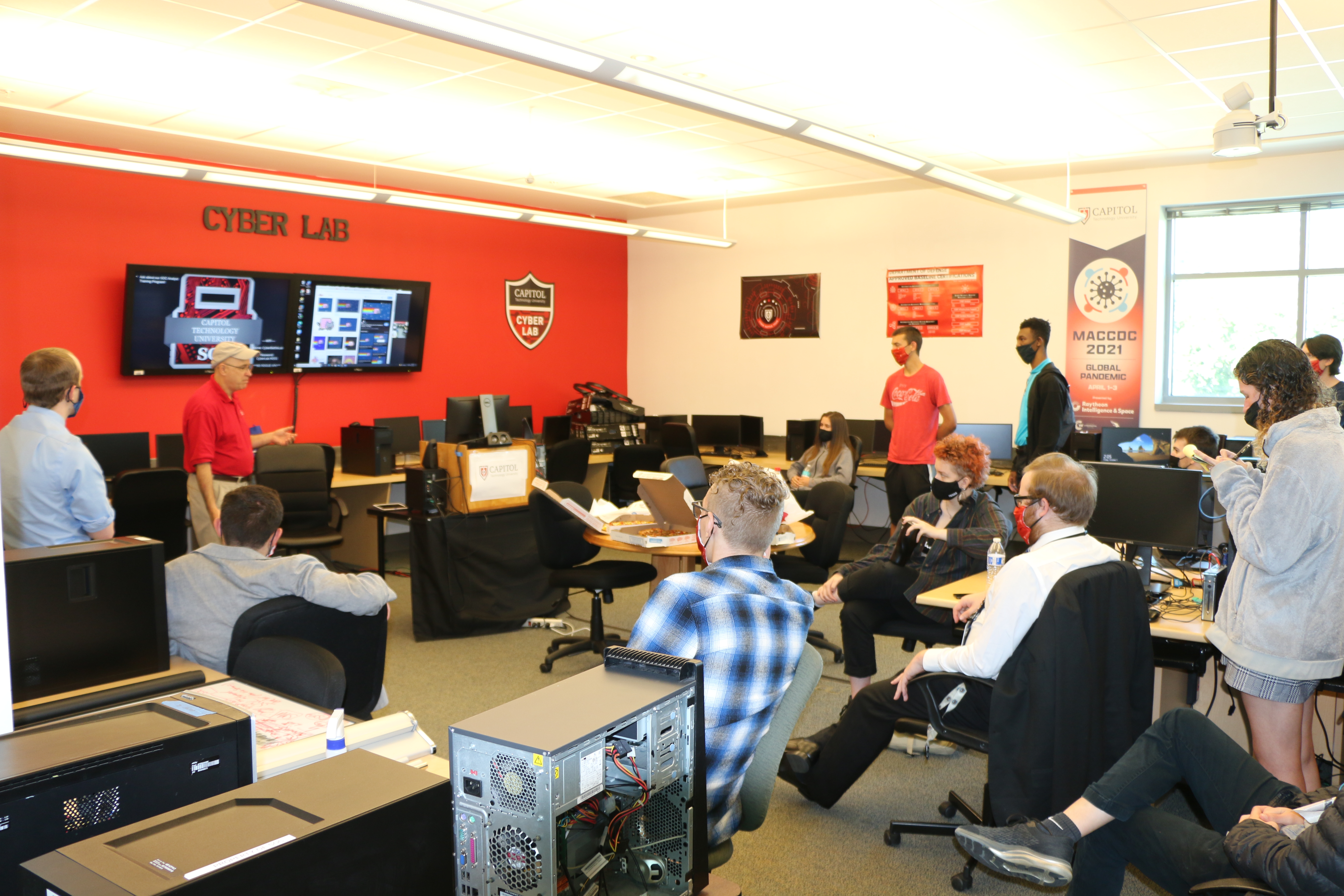
The National Security Agency and Department of Defense have designated Capitol Technology University as a National Center of Academic Excellence in Cyber Defense. We were honored to have a communications team from the NSA come to campus and produce this video explaining the benefits of our award-winning program.
Watch the Video
Digital Forensics Lab
Learn how to recover digital evidence or data from mobile devices under forensically sound conditions. You’ll put classroom knowledge to work as you work on malware evaluation and the security aspects of telematics, IoT and critical infrastructure.

Washington, D.C. – Technology Career Hub
Home to more than 1,000 tech startups, Washington, D.C. is now ranked amongst the top 10 cities for technology-based employment. The DMV area also has one of the largest concentrations of defense contractors and government agencies in the United States. Home to the Cybersecurity and Infrastructure Security Agency (CISA), National Security Agency (NSA), and the National Institutes of Health (NIH), this vibrant area offers a wealth of employment opportunities, conferences, summits, workshops, trade shows, and internships for students to explore.
Career Outlook
Graduates with advanced cyberpsychology training hold leadership and research roles at the intersection of humans and technology. Typical career paths include: cybersecurity and information security (human factors, security culture, insider risk, awareness, training).
- Trust and safety / platform integrity (abuse prevention, content moderation, online harm prevention)
- Government, law enforcement, and defense (behavioral analysis, cyber defense, policy, and training)
- Financial services and e-commerce (fraud, risk management, authentication, consumer protection)
- Healthcare and digital health ( well-being, safety, and privacy in digital care environments)
- Education and research (academic research, program evaluation, and workforce development)
- Consulting and industry innovation (human-centered risk, governance, and responsible technology)
Cyberpsychology offers key insights into human-technology interaction. With diverse studies, strong career options, and clear relevance to security, safety, and innovation, it prepares students and professionals to meet the challenges of digital society. Now is the time to take the next step: explore Capitol Technology University's Cyberpsychology program and become a leader in shaping safer, more innovative cyber futures.
Graduates with advanced cyberpsychology training hold leadership and research roles at the intersection of humans and technology. Typical career paths include: cybersecurity and information security (human factors, security culture, insider risk, awareness, training).
- Trust and safety / platform integrity (abuse prevention, content moderation, online harm prevention)
- Government, law enforcement, and defense (behavioral analysis, cyber defense, policy, and training)
- Financial services and e-commerce (fraud, risk management, authentication, consumer protection)
- Healthcare and digital health ( well-being, safety, and privacy in digital care environments)
- Education and research (academic research, program evaluation, and workforce development)
- Consulting and industry innovation (human-centered risk, governance, and responsible technology)
Cyberpsychology offers key insights into human-technology interaction. With diverse studies, strong career options, and clear relevance to security, safety, and innovation, it prepares students and professionals to meet the challenges of digital society. Now is the time to take the next step: explore Capitol Technology University's Cyberpsychology program and become a leader in shaping safer, more innovative cyber futures.