


The Nature of Swarm Robotics: How New Engineering Methods Are Transforming the Robotics Field
October 15, 2026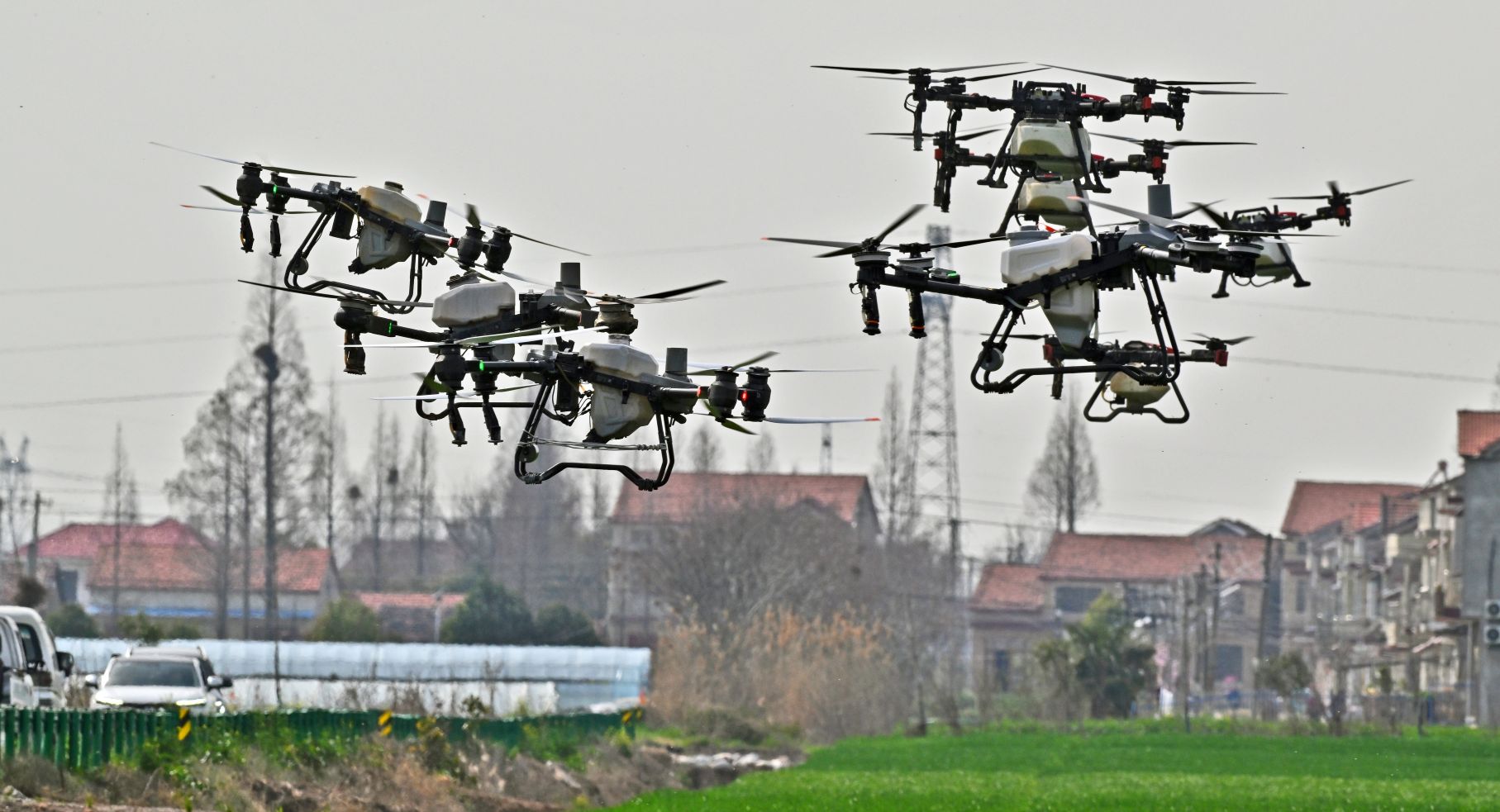
Nature offers countless examples of distributed intelligence in action, refined over millions of years of evolution—from schools of fish and colonies of ants to flocks of geese. Across these systems, principles of structure, physics, communication, and collective behavior are embedded in the fabric of life on Earth.
In a new method that combines engineering, autonomous systems, and robotics, humans are drawing on these same principles through swarm robotics, coordinating large numbers of simple devices to solve complex problems that a single device cannot. From warehouse floors and manufacturing facilities to environmental monitoring, agriculture, disaster response, and defense, swarm robotics is opening new possibilities for autonomous systems where scalability, adaptability, and resilience are essential.
The Difference Between Swarm Robotics and Traditional Robotics
Traditional robotics and mechatronics focus on designing and controlling machines that perform specific tasks by integrating mechanical components, electronics, sensors, and software. These systems often rely on a central controller, a predefined sequence of actions, or a coordinated control architecture to determine what the machine should do. Even when multiple robots work together, their behavior is frequently managed by a central system or a shared plan.
Swarm robotics takes a fundamentally different approach: instead of making one machine smarter, it distributes intelligence across many relatively simple robotic agents. Guided by local rules, decentralized decision-making, and limited communication, these systems can collectively exhibit sophisticated, adaptive behavior—often producing results that no individual agent could achieve alone.
That decentralization is what gives swarms their resilience. Losing a unit or two typically won’t stop the swarm; instead, the remaining units will redistribute the work. And because every agent keeps responding to what's actually happening around it, a swarm can adapt to a changing environment in ways a rigid, single machine can't.
The Natural Principles Behind Swarm Robotics
Two biologically inspired algorithms help illustrate how swarm robotics coordination works: ant colony optimization (ACO) and particle swarm optimization (PSO).
Ant colony optimization mimics the way ants use pheromone trails to discover efficient routes between their nest and food sources. In the robotics algorithm, artificial pheromone signals represent promising paths or solutions. Agents reinforce successful choices and favor routes with stronger signals, while weaker alternatives gradually lose influence. Over time, this collective process can identify efficient routes, optimize logistics, and support task allocation. In robotic applications, the signals may be stored digitally or communicated between agents rather than deposited as physical chemicals.
Particle swarm optimization, by contrast, draws inspiration from the collective movement of birds flocking or fish schooling. Each particle represents a candidate solution to a problem and adjusts its position based on its own best-known result and those found by its neighbors or the wider group. Repeated micro-adjustments guide the population toward promising solutions. In robotics, this approach can help optimize navigation paths, coordinate movements, and determine how tasks or resources should be distributed.
Swarm Robotics in Action
Swarm robotics has already moved well past the research lab. In manufacturing and logistics, swarm devices can manage warehouse picking and sorting, and even large-scale 3D printing of structures too big for a single printer to handle.
The highest-stakes application may be future search-and-rescue missions. Heterogeneous swarms that pair aerial scouts with ground units can map a disaster zone and detect survivors through rubble far faster than a single robot or human team alone, while also adapting in real time as conditions shift.
A 2025 study published in Communications Engineering demonstrated how a swarm of six drones could autonomously search for people hidden by dense forest vegetation. The drones explored the search area, captured complementary visual and thermal data from different positions, and coordinated their movements to improve visibility and identify potential targets. By combining observations from multiple viewpoints, the system could detect and locate people who might be difficult to identify using a single drone, including in low-light conditions. Across the researchers’ experiments, the system achieved an average detection precision of 93.2% and an average positional accuracy of 0.39 meters. This demonstrates the potential of swarm robotics for search-and-rescue operations.
The Engineering Challenges Facing Swarm Robotics
For all its promise, swarm robotics still runs into real engineering limits.
Communication is one of the toughest challenges. Robots need to know where their neighbors are, but GPS often fails indoors, underground, or in disaster areas where signals may be weak, forcing engineers toward alternative localization methods. Collision avoidance, energy efficiency, and distributed computing add further complexity because every robot has limited battery and processing power while making on-the-go decisions.
What's changing is the hardware underneath these problems. Advances in embedded systems, low-power wireless networking, and edge computing are enabling robots to handle more decision-making locally, which is a critical part of an emerging innovation that is pushing swarms toward greater autonomy.
Robotics Engineering at Capitol Tech
The growing use of swarm robotics highlights the need for engineers who understand not only how individual robots work, but also how autonomous systems sense, communicate, and collaborate to solve complex problems. As these technologies reshape industries ranging from manufacturing and logistics to environmental monitoring and disaster response, the demand for professionals with interdisciplinary expertise in robotics, artificial intelligence, autonomous systems and engineering continues to grow. Capitol Technology University’s Bachelor of Science in Robotics Engineering prepares students for careers in evolving technology by combining foundational engineering principles with hands-on learning to help develop the next generation of intelligent, autonomous, and collaborative robotic systems.
Explore what a degree from Capitol Tech can do for you! To learn more, contact our Admissions team or request more information.
Written by Jordan Ford
Edited by Erica Decker