


Balancing Space Innovation with Sustainability
June 23, 2026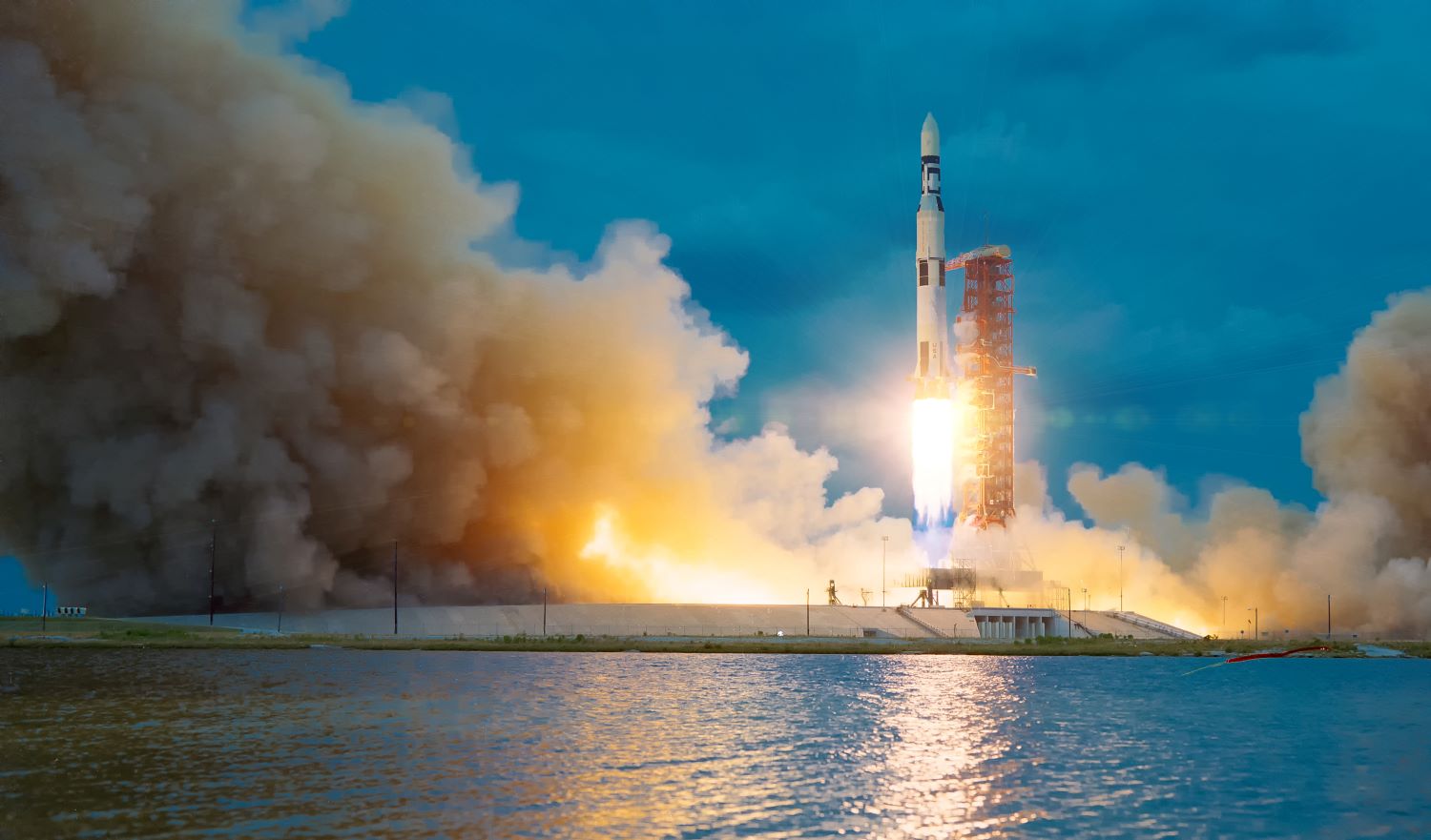
One warm night in May, the sky over Cape Canaveral lit up as Blue Origin's New Glenn rocket erupted in a fireball during a ground test. The explosion shook nearby homes and sent a bright orange glow across the Florida coast. After years of labor, the rocket was destroyed—and its fallout will last forever. Failures like this are a real part of the aerospace industry, and engineers both expect and learn from these occurrences. The concern comes as the detrimental environmental aftermath starts to add up.
The Environmental Impact of Rocketry
When rockets are tested and launched, they leave behind a vast environmental footprint. Before a rocket ever leaves the launch pad, its engine undergoes dozens of test firings to verify performance, reliability, and safety. These tests consume large quantities of propellant—from thousands of gallons to hundreds of tons per test.
Each launch and test, whether successful or failed, releases carbon dioxide, water vapor, nitrogen oxide, soot, and other combustion byproducts into the local environment. Repeated testing exposes nearby ecosystems to elevated levels of air pollution, soil contamination, and thermal stress.
According to Science Insights, “the most significant environmental concern is the direct injection of pollutants into the upper atmosphere, specifically the stratosphere and mesosphere, where they can persist for years,” negatively affecting the ozone layer. Researchers have also analyzed soil samples around launch pads and debris fields to measure concentrations of rocket fallout, and have detected elevated levels of aluminum, perchlorates, hydrocarbons, and other chemicals associated with rocket fuels and exhaust. These substances alter soil chemistry, affect plant growth, and enter local food networks. Because of this, environmental teams often conduct extensive soil assessments following launch failures or explosions to determine the extent of contamination and help guide cleanup efforts.
The environmental effects also extend beyond emissions. Rocket engines produce extreme acoustic energy, often exceeding 180 decibels near the test stand—far louder than a commercial jet at takeoff and powerful enough to damage hearing, vibrate structures, and disrupt local wildlife. The exhaust plume can reach temperatures above 3,000°C (5,400°F), requiring specialized flame trenches, water deluge systems, and reinforced infrastructure to manage the heat and pressure generated during testing.
Launch and test facilities also consume substantial resources. Large static-fire tests may use hundreds of thousands of gallons of water in sound suppression and cooling systems during a single firing. At major launch complexes, water-deluge systems can discharge up to 900,000 gallons of water in a matter of minutes to reduce acoustic shock and protect launch infrastructure.
As launch activity increases worldwide, long-term environmental monitoring is becoming increasingly important for tracking cumulative impacts and ensuring the health of surrounding ecosystems.
The Impact of a Failed Rocket Launch
When a rocket or prototype vehicle fails during testing, the environmental consequences can be more severe. Explosions scatter debris over larger surface areas than a successful launch, releasing unburned fuel and oxidizers, igniting wildfires, and contaminating nearby soil and waterways. Several high-profile launch and test failures have resulted in debris fields extending for miles and temporary closures of surrounding land to allow for cleanup and environmental assessment. In many cases, post-failure investigations have documented damage to sensitive habitats and protected wildlife areas near launch facilities.
The challenge becomes more concerning when researchers consider the scale of future space activity. NASA's assessment of spaceflight's atmospheric footprint notes that launch and re-entry mass has been roughly doubling every three years and could grow tenfold by 2040. While the environmental footprint of spaceflight remains relatively small compared to major terrestrial industries today, that footprint may not remain small for long.
Since the beginning of the Space Age in 1957, humanity has conducted more than 7,300 orbital launch attempts, with an overall success rate of approximately 93 percent, meaning hundreds of launches have ended in partial or complete failure. Beyond these orbital missions, thousands of additional suborbital flights, engine tests, static-fire demonstrations, and prototype vehicle tests have contributed to the industry's cumulative environmental impact.
Recent growth has been particularly dramatic: global orbital launches reached a record 258 successful missions in 2024—more than double the annual launch rate of just five years earlier—and industry analysts expect launch activity to continue increasing as commercial satellite constellations, national security programs, lunar exploration initiatives, and human spaceflight missions expand. Some projections suggest that future fully reusable launch systems could enable thousands of launches annually, a scale unprecedented in aerospace history.
Researchers warn that pollutants released into the upper atmosphere, including black carbon, alumina particles, and reactive chemical compounds, could accumulate as launch rates accelerate, making it increasingly important to understand and manage the environmental consequences of a rapidly growing space economy.
Mitigating Rocket Launch Fallout
The industry is beginning to shift to address these challenges through sustainable engineering and more environmentally conscious design practices. One of the most significant developments has been the rise of reusable launch vehicles. Traditionally, rockets were designed for a single mission, with most components discarded in the ocean, burned up during re-entry, or left as debris after launch. Reusable systems allow major rocket components—including boosters and, increasingly, upper stages—to be recovered, refurbished, and flown again. By extending the lifespan of expensive hardware, companies can reduce manufacturing demands, lower material consumption, and decrease the amount of debris generated by launch operations. Reusability also has the potential to reduce the energy, raw materials, and industrial emissions associated with building entirely new vehicles for every mission.
At the same time, engineers are developing cleaner propulsion technologies to reduce the environmental impact of rocket operations. New generations of "green" propellants are being designed to replace highly toxic fuels such as hydrazine, which has long been used in satellites and spacecraft but poses significant risks to both human health and the environment. Alternative propellants can offer similar performance while reducing toxicity during handling, testing, and operation. Researchers are also exploring propulsion systems that produce fewer soot particles and other pollutants that can accumulate in the upper atmosphere. Although no rocket fuel is entirely emission-free, advances in propellant chemistry may help limit some of the environmental effects associated with frequent launches and spacecraft operations.
Environmental stewardship is also becoming a larger part of the planning and regulatory process. Historically, environmental considerations were often addressed after launch systems had already been designed. Today, many organizations are incorporating sustainability assessments much earlier in development. Launch providers increasingly conduct environmental impact studies, wildlife monitoring programs, soil and water testing, emissions tracking, and habitat restoration efforts around launch and testing sites. Engineers are also improving test stand designs, water management systems, and noise suppression technologies to reduce impacts on nearby communities and ecosystems. As governments and commercial companies pursue ambitious plans for satellite deployment, lunar exploration, and human missions beyond Earth orbit, environmental reviews and sustainability metrics are becoming integral parts of mission planning rather than secondary considerations.
These efforts do not eliminate the environmental footprint of spaceflight, but they represent an important shift in how the industry approaches growth as well as the need for specialized professionals dedicated to this stewardship. As launch activity continues to increase, the long-term sustainability of space operations will depend on balancing innovation and exploration with responsible management of atmospheric emissions, natural resources, and ecological impacts. The challenge facing the next generation of aerospace engineers is not only to make access to space more affordable and reliable, but also to make it more sustainable.
Aerospace Engineering at Capitol Tech
At Capitol Technology University, students in the BS in Aerospace Engineering learn to design, develop, and advance the technologies that make modern spaceflight possible while understanding their broader impact on society and the environment. As the aerospace industry grows, so does the need for professionals who can balance innovation, performance, safety, and sustainability. Students gain the technical expertise to engineer next-generation rockets, spacecraft, and aerospace systems while exploring the ethical challenges associated with the industry.
Explore what a degree from Capitol Tech can do for you! To learn more, contact our Admissions team or request more information.
Written by Jordan Ford
Edited by Erica Decker