


Creating Water Out of Thin Air: How Atmospheric Water Generators (AWGs) May Help Solve the AI Water Crisis
June 10, 2026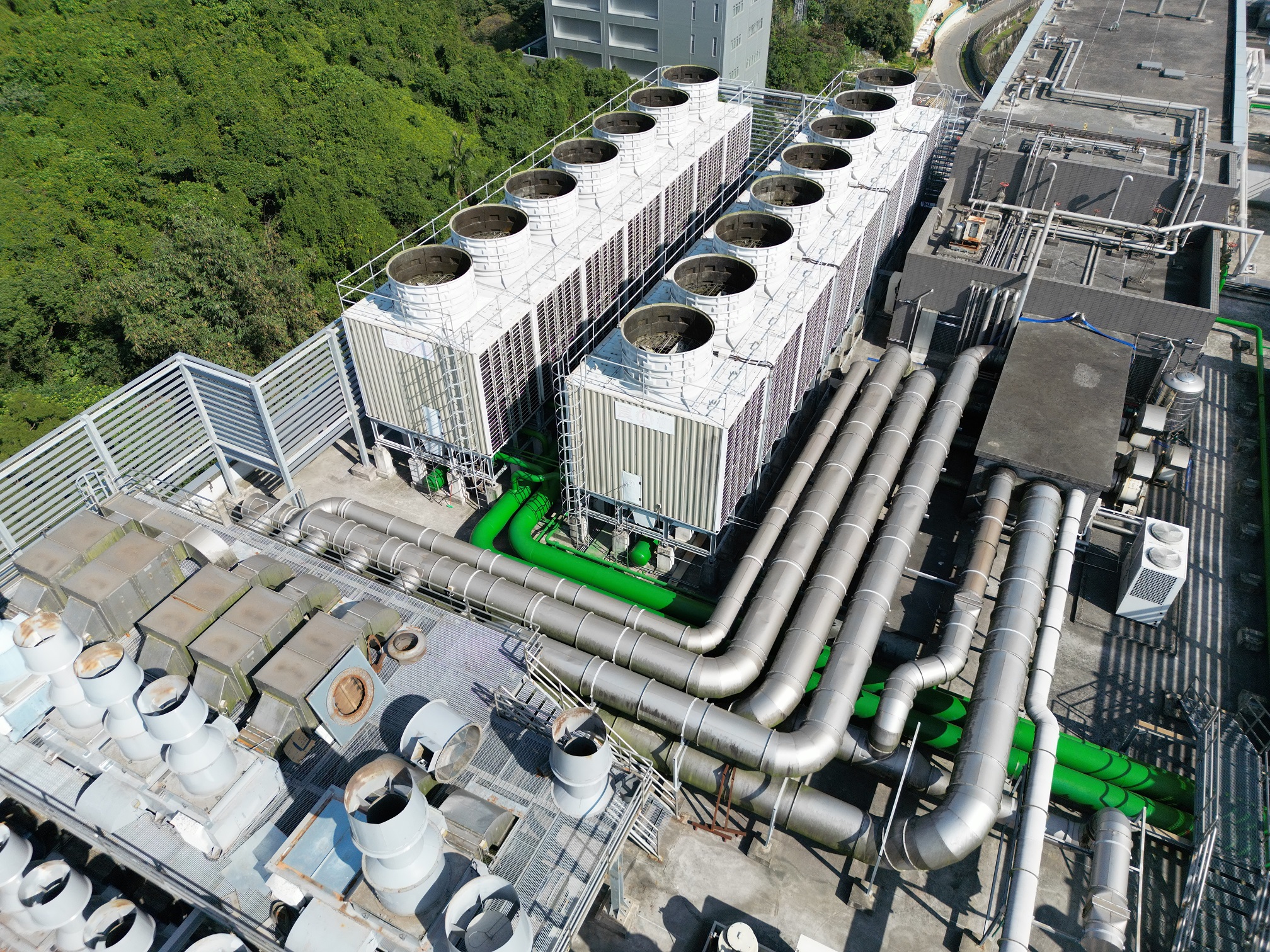
When you use generative AI, you type a prompt, hit enter, and a reply or image is created within seconds. What you don't see is the draw of water from a municipal supply used to cool the servers that power AI. Multiplying that process across billions of AI prompts a day adds to growing concerns about a global water crisis and the evolving environmental impacts of artificial intelligence.
To address these challenges, atmospheric water generators (AWGs) are becoming a popular source of optimism. Experts hope these machines, which pull clean water straight out of the air, can keep pace with AI creating the demand and offset the environmental demands of the technology.
The Hidden Cost of Every AI Prompt
Researchers estimate that a short conversation with a large AI model can consume as much as 500-milliliters of water or one bottle of water as the computing servers work to cool themselves.
As AI scales, so does the need for water to keep it operational. Beyond the water used on-site, a data center's footprint actually spans three connected categories: direct water cooling, consumption by power plants generating the needed electricity, and the enormous amount of water used to manufacture AI chips. Each of these layers compounds the others. Semiconductor fabrication alone demands millions of gallons of ultrapure water, and many of these facilities sit in regions already facing serious water scarcity, such as Arizona and California.
The result increases friction between communities, regulators, and environmental groups who are questioning whether the infrastructure of intelligence should compete with drinking water. Projections suggest U.S. data center water usage could double or quadruple within the next few years.
How Do Atmospheric Water Generators Work?
Water can't be manufactured from scratch in any practical or safe way. But it doesn't need to be because the atmosphere already offers it.
Most conventional AWGs require electricity to power cooling and condensation systems that extract water vapor from the air and convert it into liquid water. Passive AWGs operate without electricity by using moisture-absorbing materials, such as desiccants, that capture water vapor and release it when heated by natural sunlight or temperature changes. Other AWGs are powered by renewable energy sources, including solar panels, wind turbines, and hybrid systems that provide the electricity needed for condensation and water collection. Solar-powered AWGs are particularly effective in sunny regions, while wind-powered systems can generate water in areas with consistent airflow.
What was once a niche tool for remote or arid communities' water sourcing is now part of a broader shift toward air-sourced water. This shift is arriving just as AI's demands reach a new peak and demand attention.
Can AWGs Solve AI's Water Problem?
In theory, AWGs provide an elegant solution. An AI campus that produces a meaningful share of its own water could lean less on municipal systems and stay more resilient in drought-prone regions, which is where many new facilities are being built. Some startups are now piloting systems that draw on a data center's own waste heat to power water harvesting, turning a cooling byproduct back into a close-looped resource.
Where traditional AWGs are notably energy-intensive, often requiring at least one kilowatt-hour of electricity for every liter they produce, they risk trading a water problem for a carbon one. However, AWGs that use either passive systems or renewable energy sources could be scaled to support larger systems, reducing or eliminating reliance on conventional electricity. These technologies offer sustainable solutions for water production in remote communities, arid environments, and locations with limited infrastructure.
Overall, AWGs would likely work best alongside recycled water, smarter cooling, and renewable power as part of a layered sustainability strategy rather than a single fix.
AI's water footprint is real and growing. Continued AWG research offers a promising response to a possible global crisis by easing pressure on stressed supplies, the environment, and surrounding communities.
Artificial Intelligence at Capitol Tech
The future of AI will be shaped as much by ethics, policy, and resource design as by model performance. The engineers and leaders entering this field will need to be prepared to solve complex problems and create innovative solutions, not just for AI use and design, but how it impacts the environment and the public.
At Capitol Technology University, our Bachelor of Science in Artificial Intelligence pairs technical fluency with ethical considerations to deploy AI thoughtfully and practically. Students will learn how to not only build AI but balance the impact it has on the communities and ecosystems around it—a skillset that will set the next generation of AI developers apart.
Explore what a degree from Capitol Tech can do for you! To learn more, contact our Admissions team or request more information.
Written by Jordan Ford
Edited by Erica Decker