


Humanoid Robot Racing Highlights a New Era in Robotics Engineering
October 2, 2026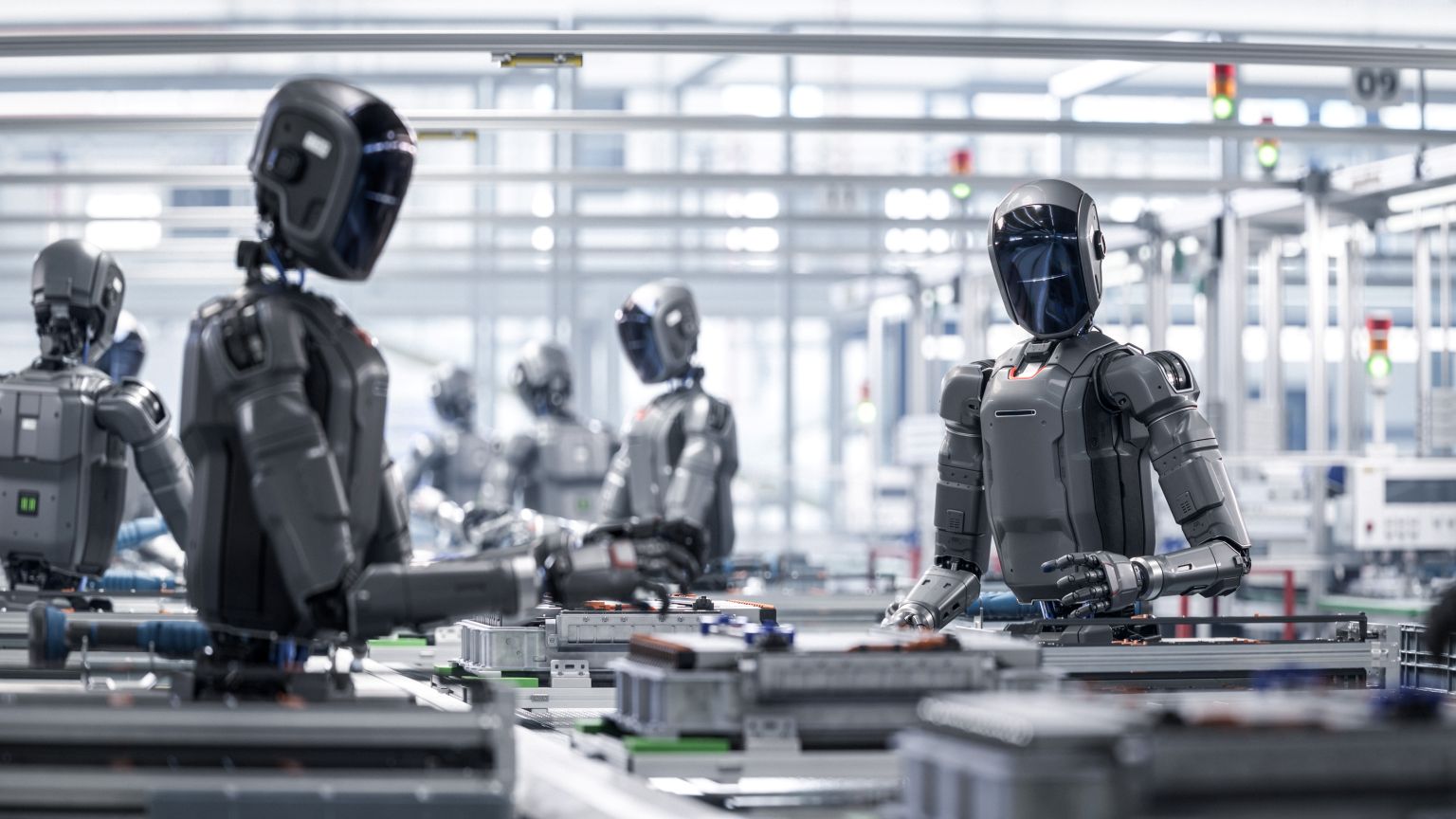
For many people in the late '90s and early 2000s, robotics became a household topic when they first saw the TV show Robot Wars, which leveraged engineering as entertainment. Teams on the show built remote-controlled machines equipped with spinning blades, moving arms, and powerful motors, then sent them into an action-packed battle arena. The competition was dramatic, and it helped introduce lay audiences to the creativity and problem-solving behind engineering a moveable machine from scratch.
While today's televised robotics competitions may look different—such as the 2026 World Humanoid Robot Games in Beijing—the core principles remain at the heart of the profession. Robotics engineers must address the challenges of mechanical design, control systems, sensors, software, power, and safety. What has changed is the sophistication of those systems and the environments in which robots can operate, reflecting how far the field has advanced and the vast potential that remains for professionals in the industry.
How Robots are Used in the Real World
Headlines about record-breaking robot athletes can make it seem as though humanoid robots are ready to replace humans. The reality is more complex. Robots may excel in highly controlled environments and movements, such as running in a straight line, but real-world situations require perception, decision-making, and adapting to unpredictable environments—which can be difficult to engineer accordingly. A robot working in a factory warehouse can operate within a carefully designed environment, while a construction site, disaster zone, or hospital presents constantly changing conditions that are much harder to predict.
The field of construction provides a good example of how this transition is already happening. Robots are being developed for tasks ranging from demolition and bricklaying to site layout, excavation, and rebar placement. Some machines can perform repetitive or physically demanding work while human workers remain responsible for supervision and decisions that require judgment. Built Robotics, for example, has developed systems that add autonomous capabilities to construction equipment, including excavators used for trenching and robots designed to drive piles for large-scale solar projects. Other systems, such as robotic layout machines, can translate digital building models into physical markings on a jobsite floor. These applications show that construction robotics does not necessarily mean replacing an entire workforce but giving human workers the mechanical means to take on dangerous, repetitive, or physically demanding tasks.
Evolved robotics is also common in logistics and warehousing. Amazon uses autonomous mobile robots to move heavy carts and inventory through fulfillment centers, while robotic arms use computer vision to identify and handle individual packages. These systems work alongside human employees rather than operating as completely independent facilities, illustrating another important direction for the industry: robots that complement human workers rather than simply replace them.
How Robotics Is Changing
Over the past few decades, robotics has moved beyond highly controlled factory environments and into increasingly complex, real-world settings. Earlier industrial robots were typically designed to repeat a specific movement with speed and precision, such as welding a car body or moving components along an assembly line. Today's systems can combine cameras, LiDAR, artificial intelligence, machine learning, and advanced control systems to perceive their surroundings and respond to changing conditions. This has opened the door to mobile robots that navigate warehouses, autonomous machines that operate construction equipment, agricultural robots that monitor and tend crops, and increasingly capable humanoid robots designed to move through environments built for people. The National Science Foundation describes this progression as a combination of sensing, computing, mechanical systems, and AI that allows robots to perceive, plan, and act in the physical world.
One of the most impressive examples came at the 2026 World Humanoid Robot Games in Beijing, where more than 2,000 robots from hundreds of teams competed in athletic and workplace-inspired challenges. The headline moment came when Tiangong Ultra, developed by the Beijing Humanoid Robot Innovation Center, completed the 100-meter sprint in just 8.64 seconds, faster than Usain Bolt's official human world record by nearly one second. Robot and human performances aren't directly comparable, of course, but the achievement still points to advances in motion control, balance, mechanical design, and AI. More importantly, the event demonstrated how engineers can use demanding physical challenges to test the limits of robotic mobility and autonomy.
The Future of Robotics and Engineering Opportunities
The future of robotics is increasingly focused on practical applications that solve real problems. Mike Thomas of BuiltIn.com notes that “robots are becoming more human-like in cognitive ability and, in some cases, appearance. In warehouses and factories, at fast food joints and clothing retailers, they’re already working alongside humans.” Progress is here and no longer happening in just one area. Advancements in AI are improving how robots perceive and make decisions, while better mechanical and computing systems are improving what they can physically do.
For robotics engineers, this means the field is becoming increasingly interdisciplinary and in-demand. The challenge and drive behind the future of the industry lies in developing machines that can understand their surroundings, make appropriate decisions, interact safely with people, and perform useful work reliably.
Robotics Engineering at Capitol Tech
As robotics expands, so do the opportunities for students interested in engineering, computing and applied technology careers. Capitol Technology University's BS in Mechatronics and Robotics Engineering Technology provides a clear pathway into engineering and mechatronics through an advanced curriculum, clubs and competitions, capstone projects, and an interdisciplinary Fusion Lab where students can put their skills into practice. These experiences help students develop strong technical and engineering skills while also building the teamwork, communication, and problem-solving abilities they need to succeed in the field.
Explore what a degree from Capitol Tech can do for you! To learn more, contact our Admissions team or request more information.