


A Pause on Data Centers: Balancing Community Concerns with Technology and National Security Needs
September 23, 2026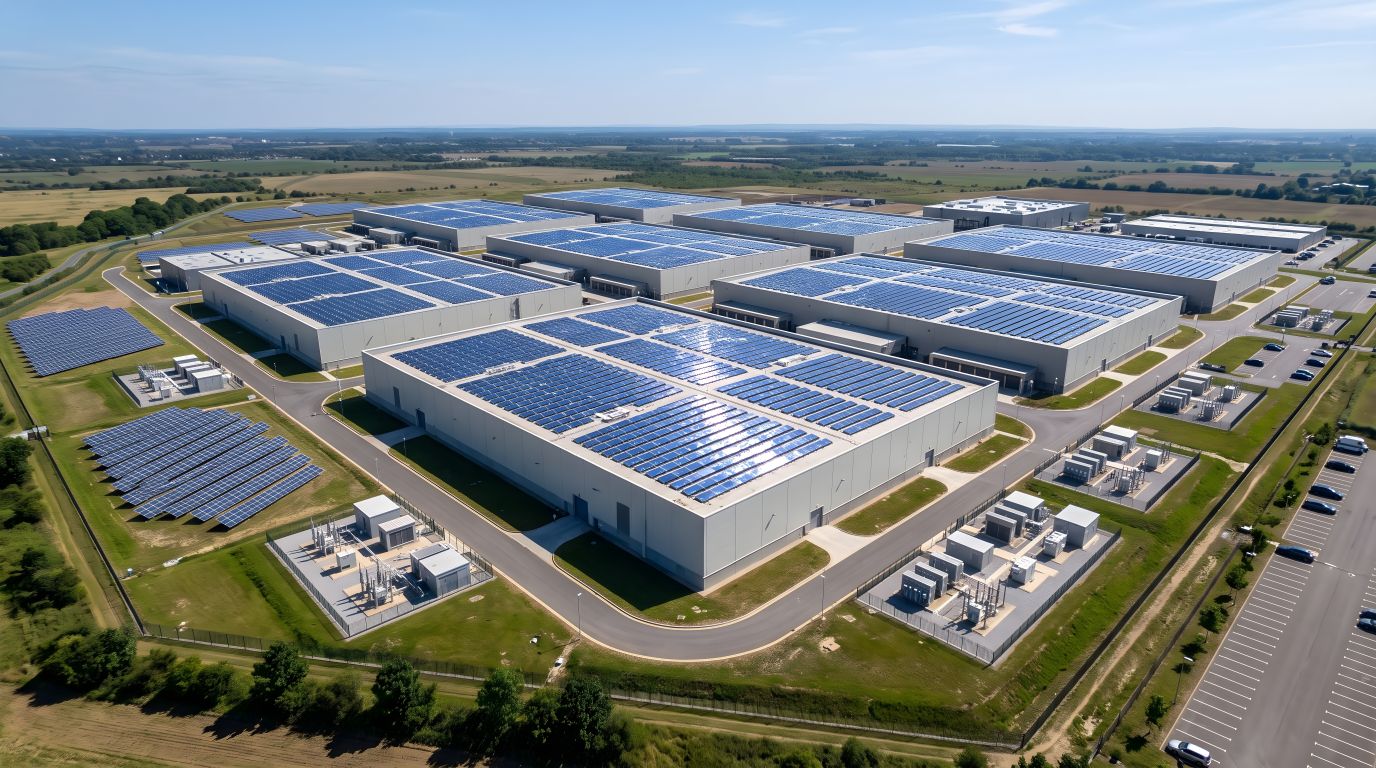
Artificial intelligence, cloud computing, cybersecurity, and scientific research all depend on data centers as a critical piece of infrastructure. These facilities power the digital services people use every day, from streaming platforms and online banking to advanced AI systems and national defense technologies. As demand for computing power grows, so does the need for more data centers.
However, rapid and large-scale expansion has sparked increasing and justifiable public concern. Across the United States, residents and local governments are raising questions about the immediate and long-term impact of massive data center development on energy systems, water resources, land use, conservation and wildlife, and quality of life. The challenge facing policymakers is how to balance the growing need for digital infrastructure with reasonable logistics concerns.
Why Data Centers are in High-Demand
In a recent report, “more than 3,000 data centers have sprung up across all 50 states, with more than 1,400 others in various stages of development.” Demand for computing power has outpaced almost every projection over the past few years. Recent industry analysis shows billions of dollars flowing into new facilities nationwide, driven largely by AI workloads and cloud expansion.
More than just commercial growth, the U.S. Department of Energy treats data centers as strategic infrastructure that underpin government operations, healthcare, research institutions, and military readiness, even as they strain electricity and grid management. In many ways, the conversation about data centers also relates to national competitiveness and even critical readiness against foreign threats.
Countries such as China are investing heavily in AI and the data-center infrastructure, viewing advanced computing capacity as an important component of economic growth, technological development, and national power. Demand for AI computing in China will increase 500-fold by 2030, according to a report by Beijing Highlander Digital Technology’s underwater data center project manager, and “over the next five years, China plans to invest approximately $295 billion in building out a nationwide network of computing hubs, led by state-owned enterprises such as China Mobile.”
Maintaining leadership in AI matters because the technology increasingly touches both the U.S. economy and national security. Advanced AI systems require enormous amounts of computing power, electricity, semiconductor capacity, and data-center infrastructure, making the ability to develop and deploy them at scale an increasingly important strategic asset. Leadership also has implications beyond technology itself, influencing scientific research, industrial productivity, cybersecurity, and the standards that shape how AI is developed and used around the world. As countries continue investing in AI capabilities and the infrastructure behind them, the competition is as much about global influence as responding to emerging threats and reducing reliance on foreign technology for critical systems.
Communities Are Pushing Back on Data Centers
At the same time, the local appetite for unlimited growth has slowed. A national AP-NORC poll found that roughly 60% of Americans now favor limits on new data center construction, while a separate New York Times/Siena poll found 61% of likely voters opposed data center construction altogether.
The concerns are rooted in rising utility costs, heavy water use for cooling, disruptive noise from generators, negative impacts on wildlife and land conservation, and the sense that neighborhoods are absorbing the side effects of a boom they don't directly benefit from. While not everyone is outright rejecting the technology, most are advocating for a say in how it is planned, developed, and deployed.
Maryland has become one of the more visible leaders in this debate. As of September 23, 2026, Gov. Wes Moore signed an executive order creating a Maryland Data Center Task Force focused on ratepayer protection, environmental impacts, community input, and transparency, while calling for repeal of the state's data-center sales-tax exemption. Reporting from Inside Climate News describes other local governments weighing moratoriums and added review processes as they try to understand the long-term impact before approving new projects.
For now, many states are imposing a pause on data center construction to focus on more strategic planning efforts and community feedback.
Finding the Middle Ground on Data Centers
The debate is often framed as growth versus restriction, but most of the practical proposals sit somewhere in between.
Developers, for instance, could be required to cover the incremental costs of new grid infrastructure rather than shifting it onto existing ratepayers. Water use could be capped or made more transparent, with incentives for cooling systems that consume less of it. Stronger noise standards could address one of the most common neighbor complaints and protect wildlife, notably in the Nashville Zoo case. And decisions could prioritize regions where the power grid already has room to absorb new demand, instead of overloading bogged down systems even more. Coupled with strategies to support greener, more sustainable practices, these proposals could find more traction in communities.
Community benefit agreements are also gaining momentum. Commitments tied to road improvements, environmental mitigation, or workforce development are often better received because the communities hosting this infrastructure see something tangible in return.
A Challenge for the Future AI Workforce
The data center debate highlights a broader challenge facing technology and infrastructure leaders: how can innovation be supported while addressing economic, environmental, and community issues?
Future professionals working in data science, artificial intelligence, cybersecurity, engineering, and technology policy will help shape these discussions. Understanding both the technical and societal aspects of infrastructure development will be increasingly valuable as organizations navigate complex decisions about growth and sustainability.
As communities, governments, and technology companies continue exploring the future of data centers, the conversation is likely to focus less on whether computing infrastructure is necessary and more on how it can be developed responsibly. The goal may not be choosing between growth and community concerns, but finding practical solutions that support both technological progress and those who live alongside it.
Data Science and AI at Capitol Tech
The next generation of AI professionals will need to understand not only the technology itself, but also the ethical strategies, logistics, and infrastructure required to support it. Capitol Technology University's BS in Data Science and AI positions students to lead at this intersection. This program builds the technical fluency to work with the systems driving this demand and the judgment to weigh their real-world tradeoffs.
Explore what a degree from Capitol Tech can do for you! To learn more, contact our Admissions team or request more information.
Written by Jordan Ford
Edited by Erica Decker