


AI in Space: Could the Next Data Center Be Built in Orbit?
November 23, 2026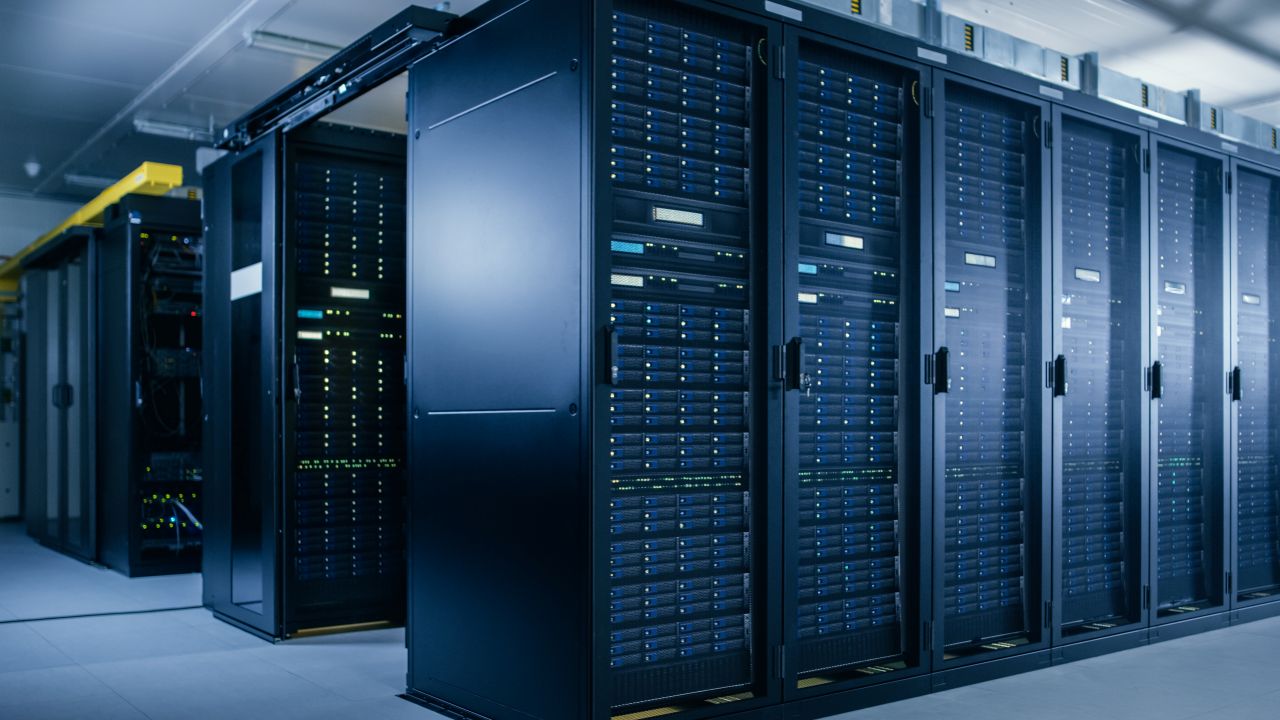
In November 2025, a startup called Starcloud launched a satellite carrying an Nvidia H100 chip, and the company went on to run a version of Google's Gemini AI from space. It was one chip on one spacecraft that pointed toward a much larger question.
As AI drives growing demand for computing power, companies are running into limits on energy, land, water, and infrastructure capacity. Some researchers, aerospace companies, and technology leaders are now asking whether data centers in space could carry part, or most, of that load.
Benefits of Data Centers in Space
The concept of having data centers in space, known as orbital data centers, places computing infrastructure in the Earth's orbit. Satellites equipped with processors, storage, communications equipment, and solar arrays would perform computing tasks in space, drawing power directly from the sun.
The technology remains in its early stages, yet interest is growing amongst tech giants. Google's Project Suncatcher research explores constellations of satellites carrying its TPU chips, linked by optical connections and powered by nearly continuous sunlight. Reported talks between SpaceX and Google about launching orbital data centers show how seriously major players are taking the idea.
The primary motivation is simple: AI requires enormous amounts of electricity. According to NPR's reporting on orbital AI, the International Energy Agency expects global data-center power consumption to roughly double to nearly 1,000 terawatt-hours by the end of the decade. Many regions already face growing competition for power generation, transmission infrastructure, and suitable development sites.
Space offers several theoretical advantages. In McKinsey's interview with Starcloud's CEO, Philip Johnston explains that an orbit synchronized with the sun keeps a satellite in continuous sunlight. Solar panels in orbit produce about eight times the energy per square meter they would on Earth.
Another potential benefit is easing pressure on land and local infrastructure. Large terrestrial data centers require substantial acreage, power connections, and cooling facilities. A space-based system would not compete for local land and water, and it would not need local zoning approval in the same way.
Perhaps the most interesting opportunity involves data generated in space itself. Modern satellites collect enormous amounts of imagery, communications data, environmental measurements, and scientific observations, much of which must be transmitted to Earth before it can be processed. Axiom Space's orbital data center nodes, the first two of which launched to low-Earth orbit in January 2026, can filter images, detect features, compress files, and run AI models in orbit before sending smaller, more valuable data to the ground.
Challenges of Data Centers in Space
Despite the excitement, orbital data centers face significant obstacles. Launch costs remain one of the biggest barriers, since every server, processor, and power component must be carried into orbit. Launching a satellite costs around $1,000 per kilogram today, and Google believes that figure must fall to about $200 before orbital data centers begin to make sense.
Heat management presents another major challenge. Space is extremely cold, but with no air to carry heat away, electronics must shed it as infrared radiation, which is a slow process. As two engineering professors weighing the challenges explain, removing 10 megawatts of waste heat can require radiators comparable in size to two football fields.
Orbital systems also face constant radiation exposure that can damage electronic components, and hardware in orbit is difficult or too expensive to upgrade. That matters because operators on Earth usually replace or upgrade servers every three to five years.
Communications, cybersecurity, and reliability also grow more complex when hardware is hundreds of miles away from the planet. Orbital data centers would need secure, high-bandwidth links between satellites and Earth. Analysts have mapped the cyber and physical threats orbital systems face, from attempts to disrupt communications or implant malware to anti-satellite weapons.
Environmental and economic questions remain as well. Frequent launches generate emissions, and the environmental trade-offs of frequent launches include a growing debris problem. Many experts expect the first viable space data centers to serve space-based customers, such as satellite operators processing Earth observation data, before they compete with mainstream cloud facilities on Earth.
Data Centers in Space Call for Specialized Engineers
Whether orbital data centers become commonplace or remain a niche technology, they show how innovation increasingly depends on interdisciplinary expertise from trained professionals. Building computing infrastructure in orbit draws on aerospace engineering, artificial intelligence, computer science, electrical engineering, cybersecurity, telecommunications, and energy systems.
Engineers must understand how spacecraft operate, how computing systems perform, how energy is generated and managed, and how data moves securely across networks. As AI, space technology, and advanced computing continue to evolve, professionals who can bridge these fields may help shape the next generation of infrastructure.
Aerospace Engineering at Capitol Tech
Placing data centers in orbit remains an emerging area of research and investment, with much left to prove before it could stand alongside Earth-based facilities. It also highlights the kind of ambitious engineering challenge that often drives technological breakthroughs.
For students interested in exploring these frontiers, Capitol Technology University's Bachelor of Science in Aerospace Engineering builds a foundation in rocket propulsion, orbital dynamics, spacecraft mission analysis, electronics, and control systems, and begins enrolling in Fall 2027. Students also practice evaluating spacecraft data and troubleshooting spacecraft issues in the university's Space Flight Operations Training Center. As orbital data centers move from theoretical discussions to real-world experiments, aerospace engineers will help decide whether some of tomorrow's most powerful computers end up among the satellites orbiting overhead.
Explore what a degree from Capitol Tech can do for you! To learn more, contact our Admissions team or request more information.
Written by Jordan Ford
Edited by Erica Decker