


In our student project blog series, we spotlight Capitol Tech students who are leading the way in innovation and creativity—told in their own words. Featuring impactful, real-world projects from the students’ perspectives, this series showcases how they push boundaries, turn ideas into solutions, and build the future through talent, curiosity, and leadership.
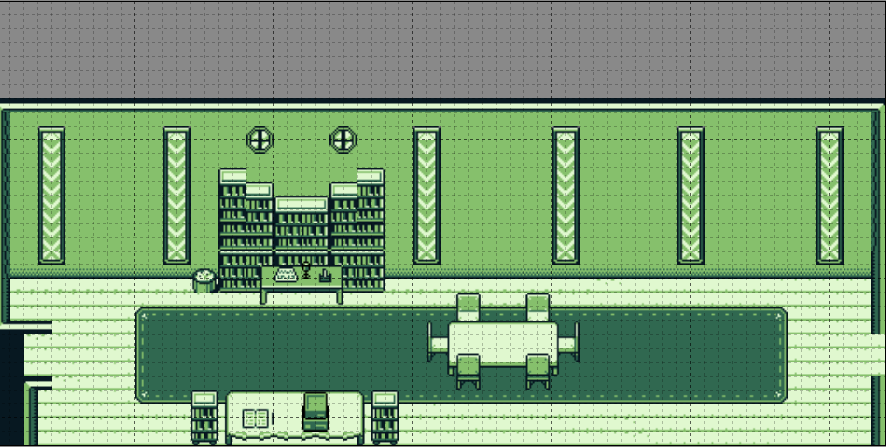
A Behind-the-Scenes Look at Student Game Design Project: Remnants: Sol Mansion
By Pedro Canas
Cybersecurity Sophomore
For my Game Design and Theory (HU 210) course at Capitol Technology University, taught by Professor Maxwell Rosenthal, our final assignment is to develop a playable prototype/demo of an original video game. The first ten weeks of the semester focused on core concepts like game design, theory, narrative structure, mechanics, and player experience, which prepared me and my classmates to tackle our final project. Our team was given about five weeks to plan, build, and refine a functional prototype.
Beginning in Week 11, we began producing weekly progress reports and conducting light playtesting with friends, classmates, and family members. These reports helped guide our development process during the short window we had to bring our concept to life.
Our team set out to create a horror themed RPG prototype titled Remnants: Sol Mansion, developed in GB Studio, a retro game creator software.
Game Overview
Title: Remnants: Sol Mansion
Genre: Horror • RPG • Turn-Based Combat
Engine: GB Studio
At its core, Remnants: Sol Mansion is a supernatural mystery game that blends atmospheric exploration with turn-based combat, drawing inspiration from titles like Earthbound, Undertale, and Deltarune. Players take on the role of Kasper, a child who wakes up, with no recollection how, in the rain outside his family’s mansion. Once he steps inside, his home appears to have been abandoned for years, yet Kasper’s last memory in the attic with his parents just moments before waking.
The game follows Kasper as he navigates the dark, decaying mansion in search of answers. Along the way, he encounters ghosts and other entities that inhabit the now ruined home. Some of these ghosts seem oddly familiar and not immediately hostile, giving Kasper the option to either befriend or eliminate them. Through exploration, turn-based battles, and environmental storytelling, the player uncovers fragments of what is really going on with the mansion.
The overall narrative culminates in a plot twist: Kasper discovers that he and his entire family have been dead for years. The ghosts he meets are the lingering spirits of those who once lived in the mansion, and the final “boss fight” of the game is with the entity responsible for the tragedy that took their lives. This emotional conclusion gives the player’s choices throughout the game impact and meaning, influencing the ending they receive based on whether they chose to eliminate or befriend the ghosts.
Team Members and Roles
Our game is the result of collaboration between me and my classmates, each taking on a specific role:
-
Pedro Canas - Music & Sound Design
-
Alias Riggs - Sprites & Artwork
-
Josiah O’Neal - Level Design
-
Eniola Osifuye - Sprites & Artwork
Dividing responsibilities allowed each of us to use our talents and focus on a certain part of the game while still contributing collectively to the larger creative vision.
Game Design & Core Mechanics
Our team chose to use GB Studio because several group members were familiar with the software. It also has a user-friendly interface making it easy and quick to learn for any members who were unfamiliar with it.
While GB Studio does come with restrictions, such as strict file size limits, limited sound capabilities, and fixed sprite rules, we embraced these challenges early on and leaned into them.
In the game, players travel through multiple floors of the mansion, each designed with several rooms, environmental details, and interactable objects. Interacting with the environment reveals more about the history of the mansion and its secrets.
Our turn-based battles draw inspiration from Earthbound’s rhythm and flow. Kasper can fight alone or with ghosts he has befriended, giving the player flexibility in their choice of combat.
One of our unique mechanics is a morality route system:
-
Befriending ghosts leads to the Good Ending
-
Eliminating ghosts leads to the Bad Ending
This choice system adds emotional weight to encounters and reinforces the narrative themes of memory, loss, and consequence.
So far, our team has completed character sprites for Kasper, Julie (Kasper’s younger sister), and Axel (Kasper’s older brother), along with background ambience, early music tracks, and initial floor plans and room layouts for the mansion. Current work in progress includes implementing the turn-based combat system, creating additional character and enemy sprites, expanding the soundtrack and sound effects, completing full scripting and event triggers, and developing additional floors and boss encounters.
Challenges and Constraints
Scheduling conflicts were one of our biggest challenges. As college students with differing class, work, and personal schedules, coordinating our time was difficult. This made GitHub essential for working asynchronously, which we used for version control and sharing updated files virtually.
Scope control was another challenge we faced. Several ideas were passed around our creative team during meetings, and although these would make for nice mechanics and unique design choices, it was important to remember the limited amount of time we had to complete this project.
We also had to work around several GB Studio limitations. Although GB Studio made development easier in some ways, it has its restrictions, including limited memory for large files, constraints on sprite sizes, frames, and tile maps, and a basic built-in music tracker. These limitations forced us to think carefully about how we were going to work around them and still achieve the results we were looking for.
What We Learned
This project taught us valuable technical and collaborative skills, giving us a clearer understanding of both our individual strengths and how we function as a team. Working as a four-person group highlighted the importance of dividing tasks, setting expectations, and trusting teammates to complete their parts of the project, while also showing how powerful consistent communication can be in keeping everything moving forward. Throughout the process, we each gained more hands-on experience with game development, including narrative pacing, level design structure, player choice consequences, and the value of iterative testing and refinement.
We also developed stronger proficiency in GB Studio, particularly in composing music within the Music Editor, creating mood-appropriate ambience, and syncing audio with events and scenes. In addition, using GitHub taught us how to push and pull changes without overwriting each other’s work, track our progress safely, and revert to previous versions when something “broke”—which dramatically increased our overall efficiency.
Remnants: Sol Mansion has been a challenging but extremely rewarding project for our Game Design and Theory course. Developing a horror themed RPG in GB Studio allowed us to apply classroom concepts directly with hands-on experience that translates to real-world application. From narrative design to team collaboration, this project has strengthened our understanding of what it takes to build a cohesive, immersive, and engaging game at a professional level.
As we continue refining the mechanics, adding assets, and polishing the experience, we hope to deliver a final project that reflects the effort and creativity each member brought to the project.