


Aerospace and Astronautical Engineering
Launch your career at the forefront of air and space innovation.
Aerospace engineering and astronautical and space engineering represent two distinct but complementary paths shaping the future of flight and exploration. Aerospace engineering focuses on the design, development, and operation of aircraft and systems within Earth’s atmosphere, including fixed-wing aircraft, rotorcraft, and uncrewed aerial systems. Astronautical and space engineering, by contrast, is dedicated to technologies beyond Earth—encompassing satellites, spacecraft, launch vehicles, and deep-space missions. Together, these fields support advancements in transportation, national security, communications, and scientific discovery.
Pursuing a degree in aerospace engineering equips you with expertise in aerodynamics, propulsion, flight dynamics, aircraft design, and aerospace materials. You'll develop the skills needed to bring innovation to aviation and atmospheric flight systems, addressing challenges in efficiency, safety, and performance.
A degree in astronautical and space engineering focuses on the principles and technologies required for space exploration and operations. You'll study orbital mechanics, spacecraft design, propulsion systems, satellite technology, mission planning, and systems engineering—preparing you to contribute to the rapidly evolving space sector.
As both the aerospace and space industries continue to expand—driven by advancements in commercial aviation, defense, and the global space economy—demand is growing for highly skilled engineers in each discipline. Whether your interests lie in advancing flight within Earth’s atmosphere or exploring beyond it, our degree programs provide the foundation for influential and rewarding careers.
Learn More
Why Study at Capitol Tech?
What sets Capitol apart? We connect your education to real-world opportunities through:
A Leader in STEM Education Since 1927
Since 1927, Capitol Technology University has been leading the way in STEM education. Our industry-connected programs, accomplished faculty, and forward-thinking curriculum ensure students are prepared not just for today's careers, but for the technologies, networking, and opportunities shaping the future.

Best Outcomes for Graduates
A10-year study conducted by the MD Longitudinal Data System Center (MLDSC) found that Capitol Tech graduates earn higher salaries than students from all other Maryland colleges and universities at every academic level, leading to the best outcomes for Maryland graduates. Our alumni achieve some of the highest earnings among their peers, demonstrating the value of our career-focused education and strong pathways to in-demand industries.
Read More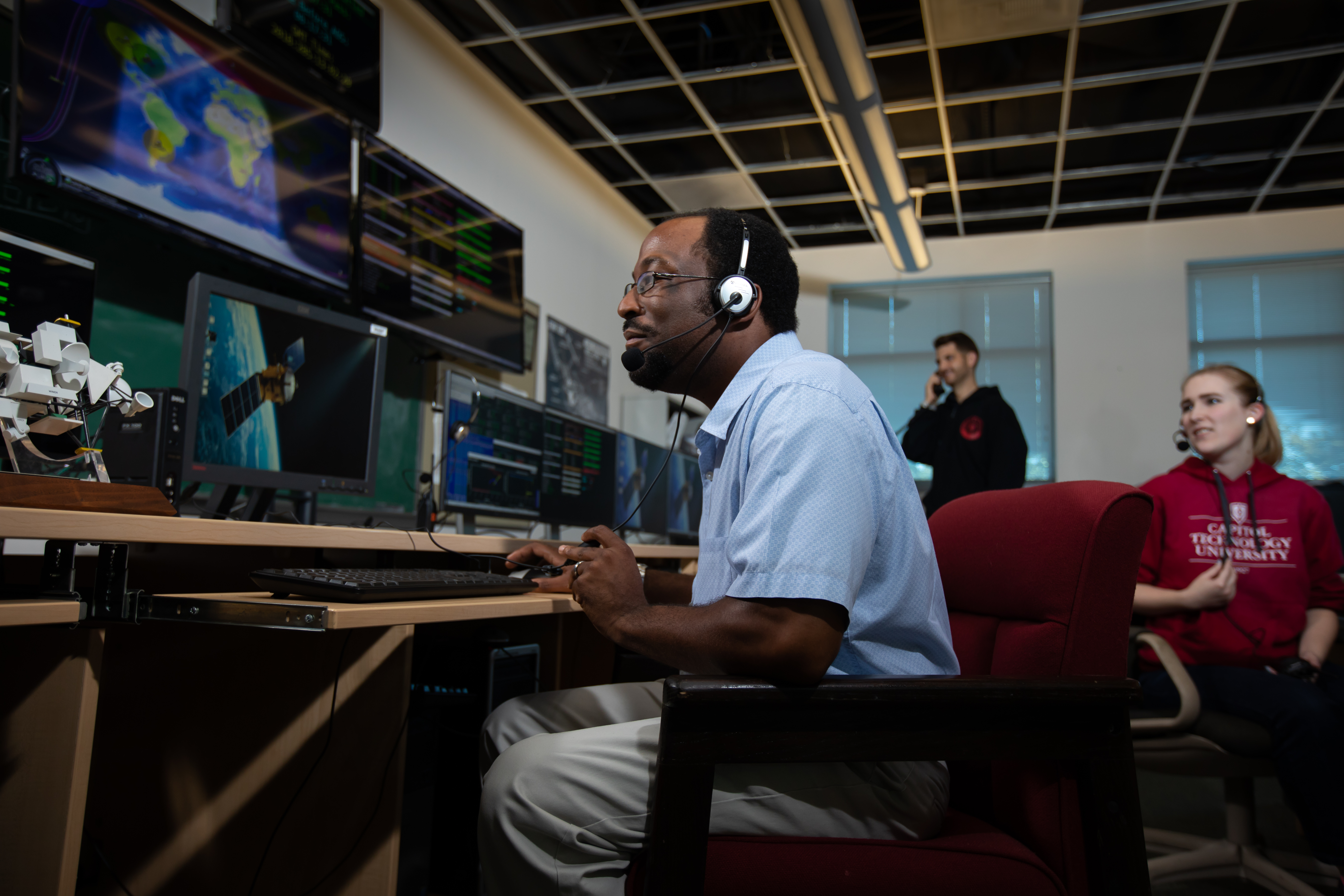
Space Flight Operations Training Center
The Space Flight Operations Training Center (SFOTC) provides a hands-on opportunity to learn the skills associated with evaluating spacecraft data and controlling and troubleshooting spacecraft issues in a virtual environment that is identical to the environment used in industry. The SFOTC is used as a laboratory environment for many core ASE classes, as it's training replicates real-life scenarios and teaches the intricacies of spacecraft development, operations, and data analysis.
Learn more about the SFOTC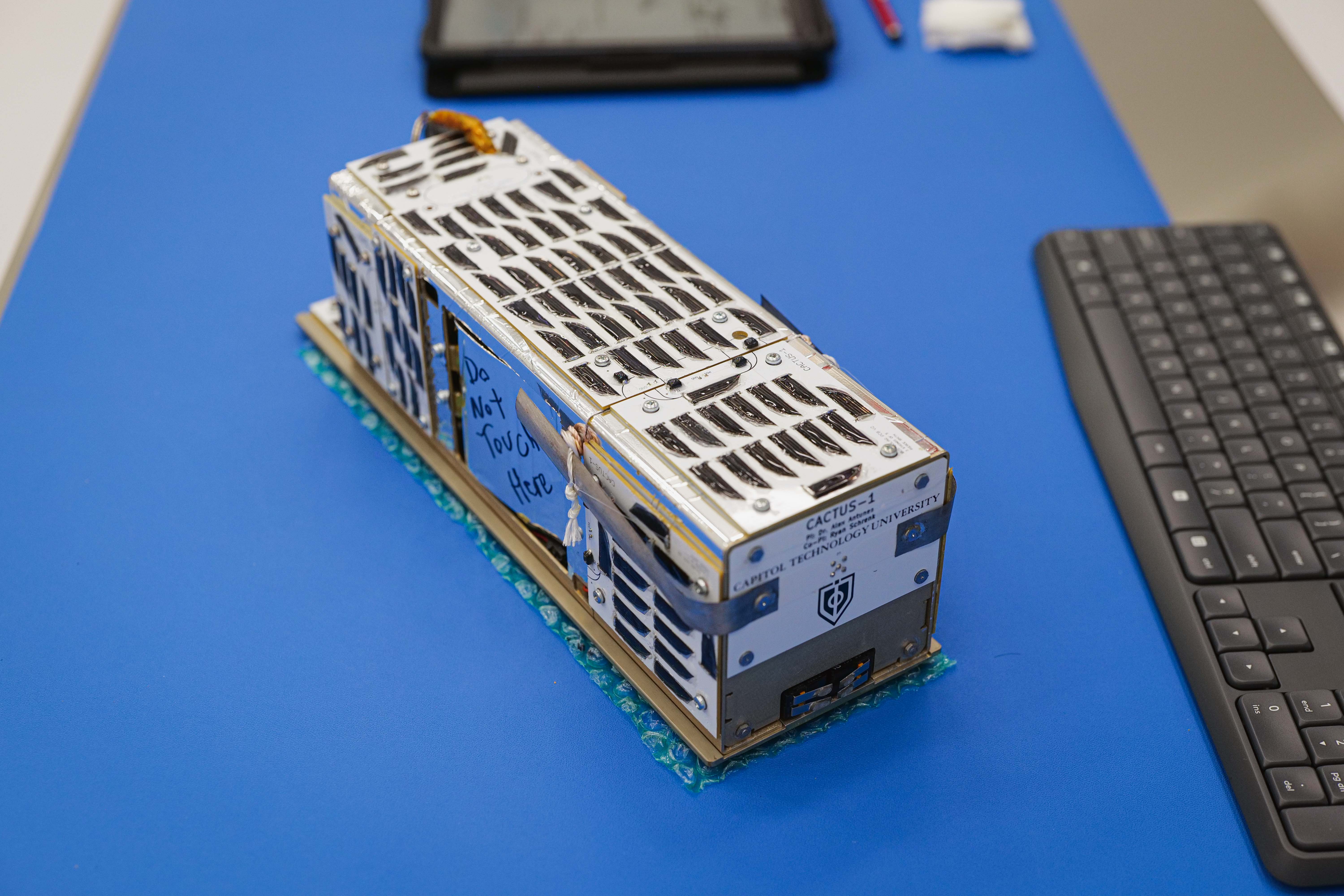
Research Collaborations with NASA
Capitol Technology University is an emerging hub for data collection and analysis in collaboration with NASA research efforts. Following NASA’s launch of its first CubeSat (a miniature, cube-shaped satellite) in 2006, our astronautical programs provide students with the hands-on experience to design, build, and deploy these instruments to inform ongoing NASA research. Our campus will also host one of the few observatories in the D.C. area, where students can remotely access satellites to observe and monitor objects like comets, asteroids, and meteoroids. Our graduates will possess the most current skills and knowledge in an evolving, cutting-edge specialization.
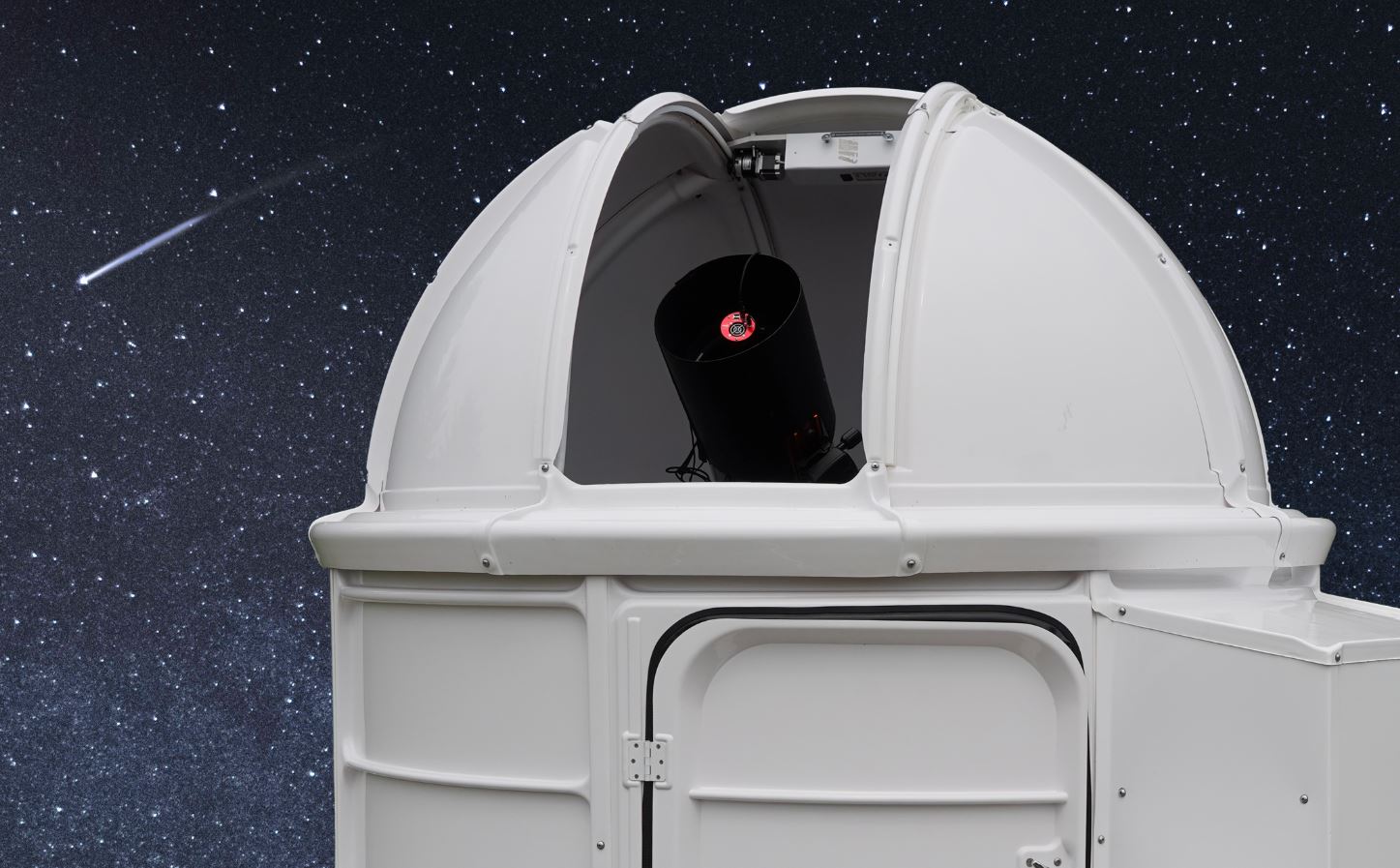
The ALPHA Observatory
The ALPHA Observatory offers students hands-on experience with space equipment, performing research that contributes to the study of Near-Earth Objects (NEOs) and current NASA and Minor Planet Center (MPC) research.
Learn more about ALPHA Observatory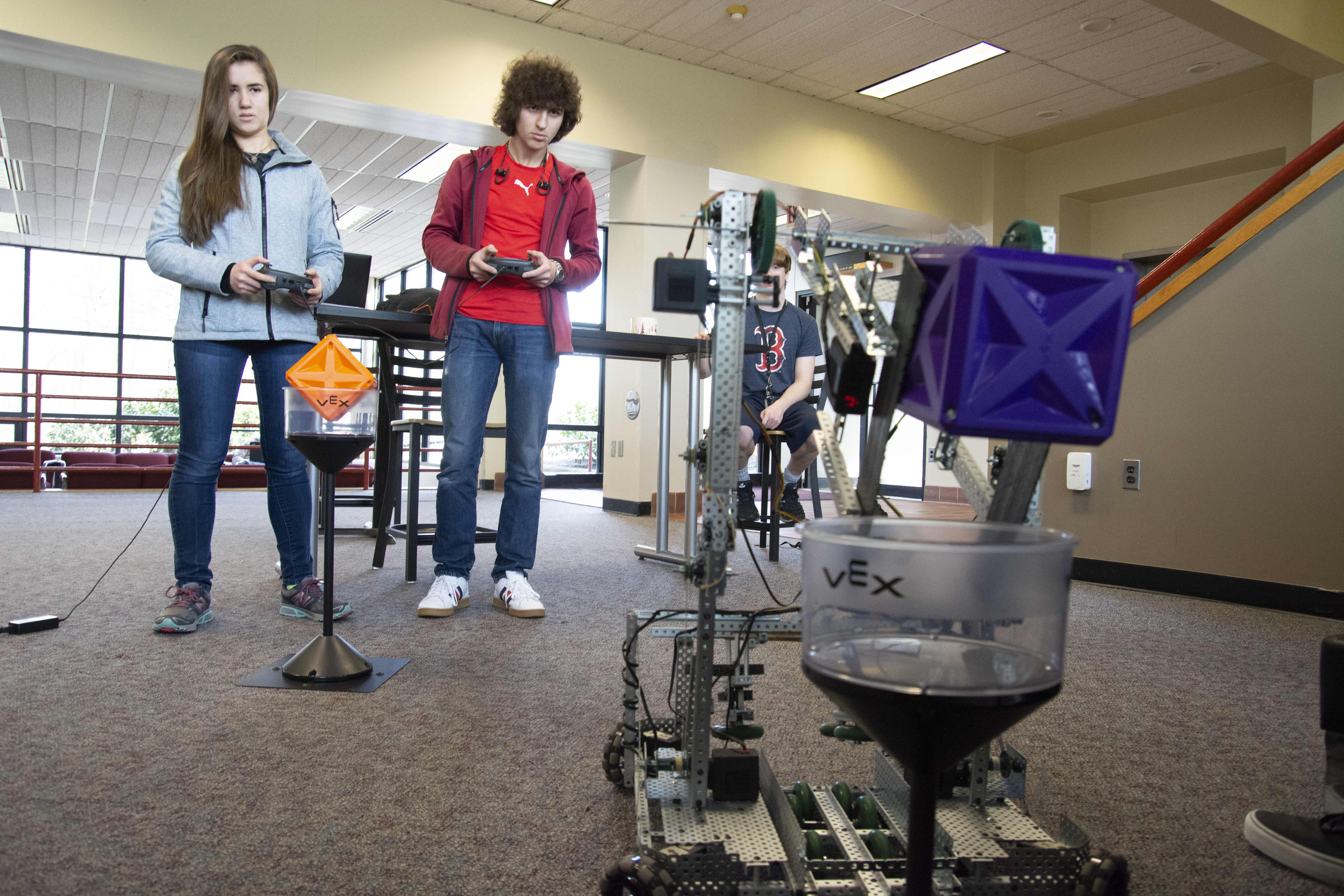
Student Engagement Opportunities
We believe in providing opportunities for our students to become more involved in their education through networking events and peer groups. We currently have several clubs and organizations open to students who are interested in taking their education outside of the classroom in the form of extracurricular activities, including the Astronomy Club, Engineering Club, and Robotics Club, to name a few.
Research Collaborations with Maryland Space Grant Consortium
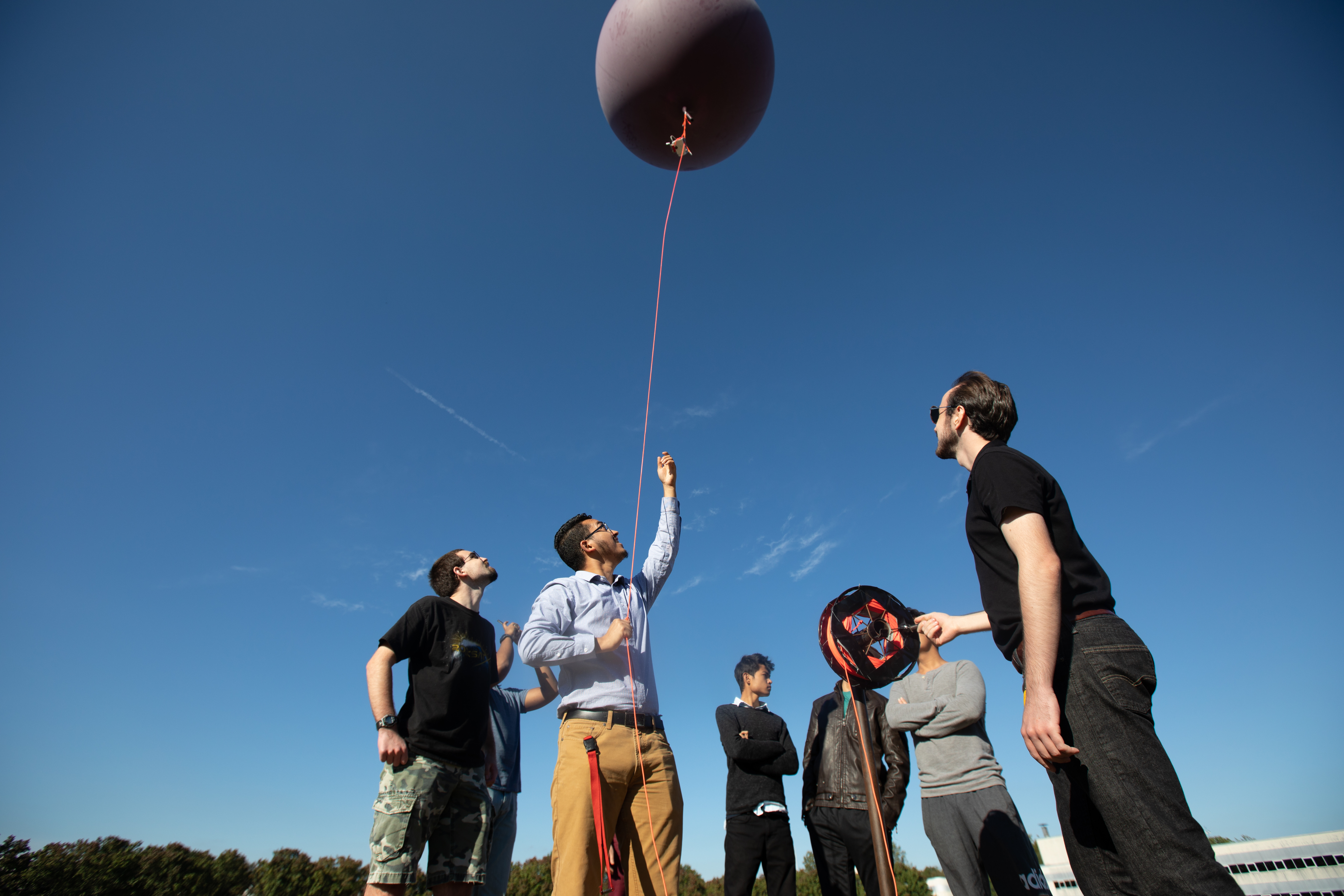
Collaborate with fellow students to develop and test high-altitude sensors and instruments used in a high-altitude balloon (HAB) launch. Students will design instrument housing structures, set payload requirements, and analyze data collected for projects like RockSatX.
Hands-on Laboratory Experience
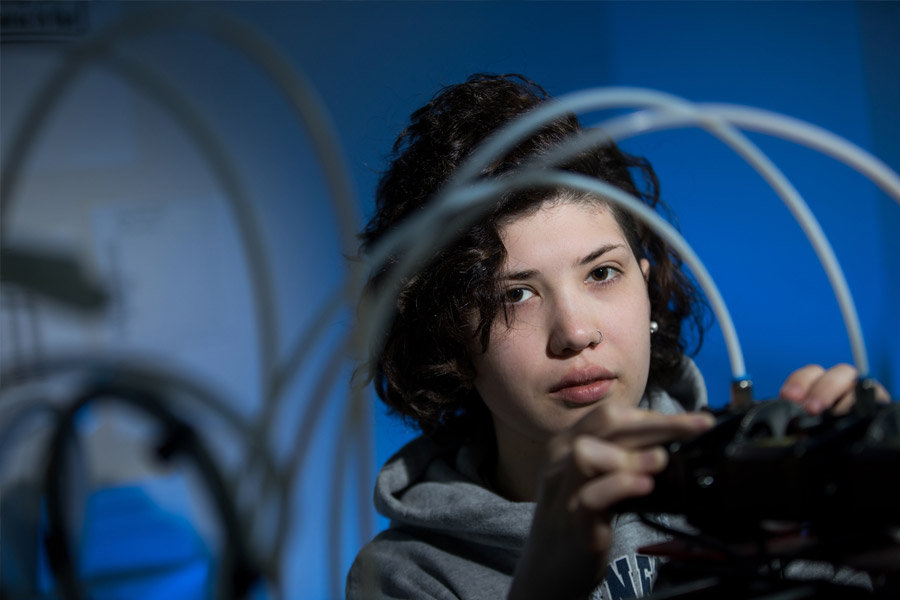
In our Fusion Lab, there are opportunities for students to develop and lead their own projects. There are multiple 3-D printers, a 1.4-watt laser, and computers equipped with modeling software at your disposal to work on picosatellite shell development and creation, high-altitude balloon payload projects, and other activities.
Washington, D.C. - Technology Career Hub
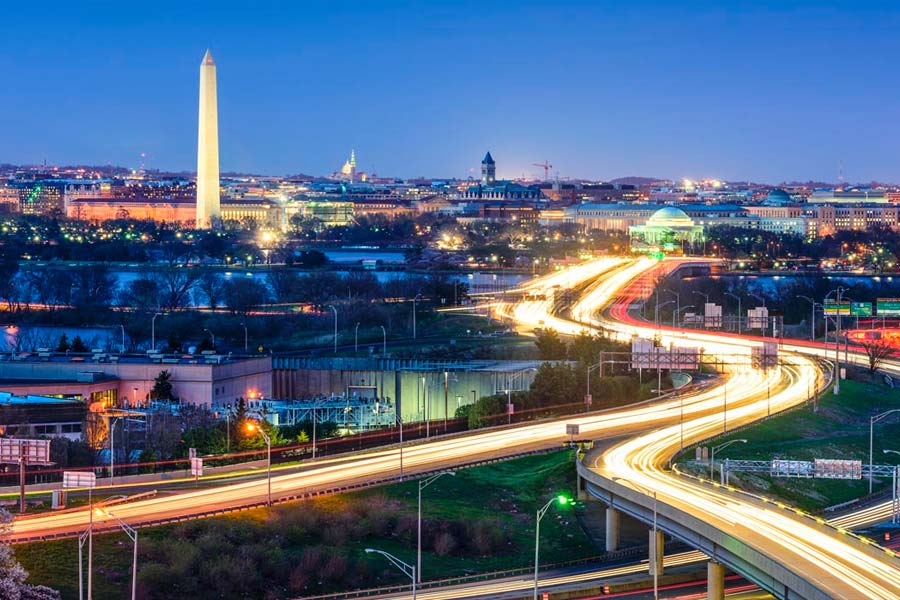
The DMV area, especially Washington, D.C., has one of the largest concentrations of tech companies, defense contractors, and government agencies in the United States. In addition, our campus is located near the NASA Goddard Space Flight Center in Greenbelt, MD. This vibrant area offers a wealth of conferences, summits, workshops, trade shows, and internship opportunities for students to explore.

Program Modalities Built for Success
Whether your program is offered on-campus or online, you will receive a world-class education that prepares you for success. Our undergraduate programs are delivered on campus, providing a traditional college experience, while our master’s and doctoral programs are offered 100% online, giving working professionals the flexibility to advance their education without putting their careers on hold.
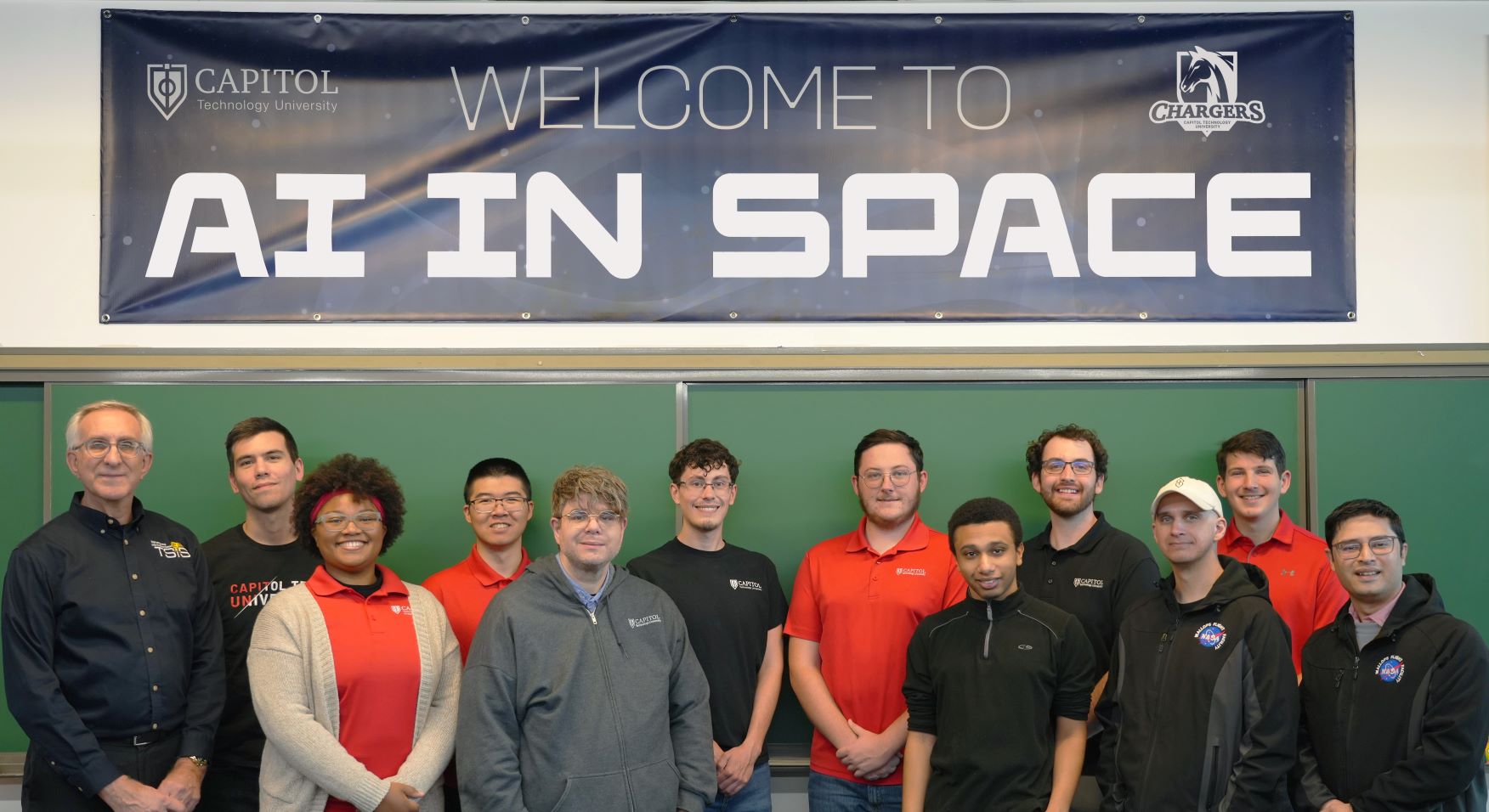
From Learners to Leaders: Student Stories Featured
At Capitol Tech, our students aren’t just learning—they’re leading. From cutting-edge research and real-world internships to groundbreaking projects and community impact, our students are showing up in the headlines and earning recognition across industries. Follow our news feed to hear more about their journeys, celebrate their achievements, and stay connected!
Visit Our News and Events SiteCareer Outlook
The global space economy is projected to reach approximately $1.8 trillion by 2035.
Source: https://www.weforum.org/press/2024/04/space-economy-set-to-triple-to-1-8-trillion-by-2035-new-research-reveals/
According to the BLS, aerospace engineers earn a median annual salary of $134,830.
Source: https://www.bls.gov/ooh/architecture-and-engineering/aerospace-engineers.htm
More than 11,700 active satellites currently orbit Earth, and experts project that tens of thousands more could be launched in the coming decades.
Source: https://www.livescience.com/how-many-satellites-orbit-earth
Employment of aerospace engineers is projected to grow 6% from 2024 to 2034, faster than the average for all occupations, with approximately 4,500 job openings each year.
Source: https://www.bls.gov/ooh/architecture-and-engineering/aerospace-engineers.htm
NASA, U.S. Space Force, and commercial space companies like SpaceX continue to invest billions of dollars in space exploration and advanced technologies, creating strong demand for astronautical engineers.
Source: https://www.theguardian.com/science/2026/mar/09/nasa-contractors-artemis-mission